
ACOUSTIC SENSING / ENGINEERING AND PROCUREMENT
Acoustic Drone Detection OEM: Design a Handover Package That Can Be Audited
An acoustic drone detection OEM project does not finish when a sensor, PCBA, or software build arrives. The receiving team must be able to identify what was delivered, connect it to the surrounding system, reproduce the agreed test, and know who may change the classification logic later. A documented handover package makes those questions answerable without treating a supplier's brochure as a substitute for project records.
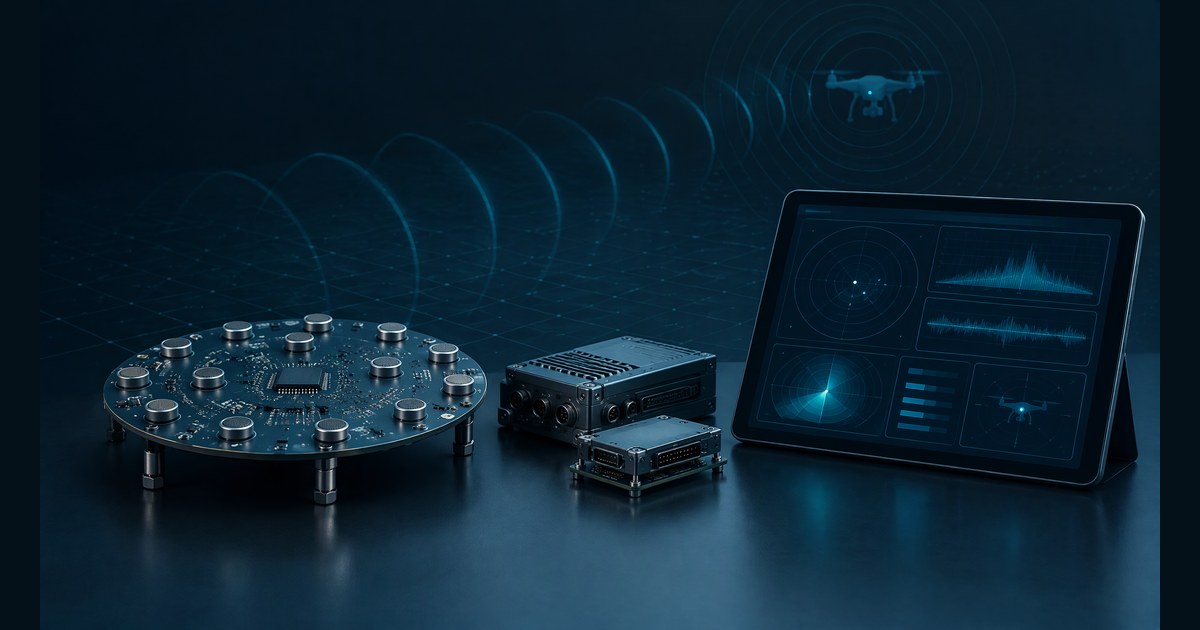
A documented handover package turns an acoustic sensing OEM arrangement into a repeatable engineering and support process. This guide shows buyers and integrators what to request, how to separate delivered configuration from future options, and how to keep classification updates traceable.
Start with a controlled definition of the delivered product
The first handover question is not which file format to use. It is which exact configuration the files describe. NASA's configuration-management guidance links product integrity to controlled changes, unique identifiers, baselines, and records that keep the product consistent with its documentation. For an OEM project, use that principle as a practical procurement requirement rather than assuming that every programme needs NASA's own review structure.
Create a configuration index
Ask for one index that names the hardware revision, board or sensor identifiers, firmware and application versions, interface definition, mechanical information, calibration status, and the date of the handover. Include the document revision beside each item. If a file is not part of the delivered baseline, label it as an example, draft, option, or supplier-controlled reference. This prevents a later reader from confusing a sample SDK, an engineering drawing, and the configuration that passed the agreed review.
Separate the product baseline from the project boundary
A product baseline can describe what is built and supported, while a project boundary records what the OEM partner is permitted to assemble, modify, brand, distribute, or support. Put both in writing. A request for local assembly does not automatically grant source-code access, design ownership, resale rights, or authority to change detection behaviour. Those are commercial and technical decisions that require explicit agreement.
Make the technical data package usable by the receiving team
NASA describes technical data management as planning, acquiring, protecting, accessing, and using technical data across a system life cycle. Its guidance also treats a technical data package as more than a drawing: it can include specifications, performance requirements, quality provisions, packaging details, and procedures needed for acquisition, production, engineering, and support. That is a useful test for an OEM handover: can the named receiving roles use the package without repeatedly asking the original engineer to explain missing context?
Document interfaces in operational terms
For each physical and digital interface, record connector or transport assumptions, power and environmental constraints, message fields, units, timestamps, health states, error handling, and version dependencies that actually apply to the project. State which outputs are observations, bearings, tracks, classifications, or confidence values. Acoustic sensing listens for observable sound; the package should not describe a classification output as proof of aircraft identity, flight authorisation, or an automatic response decision.
Control access, formats, and data rights
The handover index should identify the owner or originator of each item, the authorised recipients, permitted use, retention expectations, and any export, privacy, or proprietary restrictions that apply. Deliver editable source files only when the agreement says they are included. Otherwise, distinguish review copies from controlled production files. This makes the package useful without implying that an OEM label changes intellectual-property ownership.
Turn verification evidence into a repeatable acceptance record
A handover package should show how the delivered configuration was checked, not merely state that it was tested. NASA's configuration guidance describes verification through inspection of documents, products, and records, together with checks that the design is documented and that requirements and functional attributes have been achieved. For civil sensing projects, the receiving team can adapt this into an agreed evidence bundle.
Include the test context, not only the result
Record the test objective, hardware and software identifiers, input or acoustic conditions, environmental context, setup, instruments, procedure revision, observed outputs, deviations, and reviewer approval. If a classification example is included, label it as a project test observation rather than a universal accuracy claim. Site noise, mounting, weather, target type, and the approved test design can materially affect what the result means.
List open items and retest triggers
A useful handover record says what remains unresolved. Examples include a pending interface mapping, a calibration record to be supplied, a documentation correction, or a software issue accepted for a defined phase. Link each item to an owner and a closure method. Also define which changes require a new verification run, such as a hardware revision, acoustic front-end change, model update, interface change, or alteration to a site-specific threshold.
Treat classification updates as controlled releases
Acoustic classification is not a one-time label that can be changed informally after handover. A release package should identify the model or rule-set version, supported input assumptions, known limitations, training or evaluation provenance where disclosable, change summary, test evidence, rollback path, and approval status. NIST's Secure Software Development Framework provides a common vocabulary for software producers and purchasers to discuss secure development and acquisition practices; it supports asking for evidence and release controls without claiming that NIST certifies a particular acoustic product.
Define compatible and breaking changes
The OEM agreement should distinguish a maintenance correction from a change that affects outputs, thresholds, message fields, timing, resource needs, or downstream interpretation. Microsoft documents API version changes as a response to backward-compatibility breaks. The same discipline is useful here: state whether a classification update can be installed within the existing integration, requires a new interface version, or must be evaluated again by the receiving party.
Record who can approve and deploy an update
Write down whether updates are supplier-managed, OEM-integrator-managed, or jointly approved. Include the release channel, signing or integrity checks if used, installation prerequisites, backup and rollback responsibility, and the support contact for a failed update. Do not assume that a licence to use an OEM-branded system includes rights to inspect, retrain, redistribute, or independently modify the classifier.
Close the handover with roles, training, and change control
The final package should help the new operating team sustain the agreed configuration. It should therefore include a responsibility matrix for supplier, OEM brand owner, integrator, installer, and site operator. The matrix should cover incoming inspection, installation, calibration or health checks, incident review, software release approval, warranty communication, and escalation. NASA's guidance emphasises configuration status accounting and change disposition because historical traceability matters when investigating problems or deciding whether a change is safe to accept.
Use a handover sign-off that names evidence
Sign-off should reference the configuration index, test records, unresolved-item register, training record, access list, and agreed support terms. It should state what has been accepted, what remains conditional, and which documents are still supplier-controlled. This is more useful than a generic delivery note because it gives procurement, engineering, and operations a shared record of the same baseline.
Ask the OEM partner five practical questions
Before award or final acceptance, ask: Which exact files define the delivered configuration? Which interfaces and outputs are guaranteed only after written project confirmation? What evidence supports each agreed verification item? Who owns and approves future classification releases? What happens when a release, component, or interface changes? Clear answers expose gaps early and keep the handover package aligned with the actual cooperation model.
Make the document index a bid and acceptance requirement
Give bidders a proposed handover index and ask them to mark each item as included, conditional, supplier-controlled, or excluded. Carry the accepted index into design review, pilot acceptance, and production release. Confirm the final contents, access rights, update process, and evidence format in writing for the specific project.
Discuss your projectThe checklist is general project guidance, not legal advice or a statement of SonicVast availability, certification, accuracy, licensing, warranty, or commercial terms. Hardware, SDK/API contents, classification ownership, update rights, and support obligations require written confirmation for each OEM engagement.