
ACOUSTIC SENSING / ENGINEERING AND PROCUREMENT
Acoustic Drone Detection System Integrator: Plan a Customer Handover Without a Vendor Black Box
Choosing an acoustic drone detection system integrator is only the beginning. The harder procurement question is what the customer will actually control after commissioning. A handover that delivers a powered-up sensor but not the approved configuration, interface map, test record, access model, and change process leaves the operator dependent on undocumented vendor knowledge. A no-black-box handover does not require disclosure of every proprietary design detail. It requires a usable, versioned record of the system that was delivered and a clear route for operating, diagnosing, and changing it.
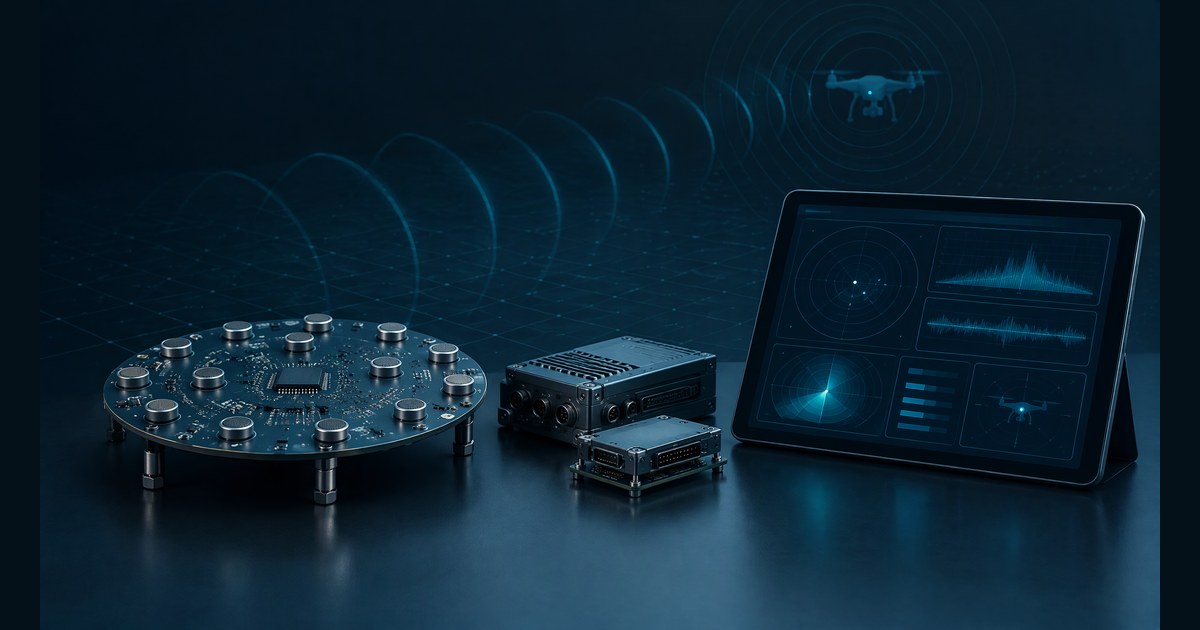
A practical handover framework for transferring an integrated acoustic sensing system with its configuration, evidence, operating knowledge, and future-change responsibilities visible to the customer.
Define the handover as an operational outcome
Start by describing what the customer must be able to do after the integrator's final intervention. NASA systems-engineering guidance treats technical data, interfaces, responsibilities, and transition activities as part of the engineering effort rather than paperwork added at the end. For an acoustic installation, the handover should therefore be planned alongside integration and acceptance.
Name the people who must use the package
The package normally serves more than one audience. An operations team needs normal start-up, health checks, alarm review, and escalation steps. A maintenance team needs replacement and diagnostic procedures. An IT or cybersecurity team may need account, network, update, backup, and log information. A future integrator needs interface definitions and change history. Assign an owner and a backup for each responsibility instead of assuming that one administrator will absorb all knowledge during a demonstration.
Set a handover gate before the final demonstration
Make document completeness an entry condition for acceptance, not an afterthought. The gate can require a delivered-configuration inventory, interface and data-flow diagrams, approved software and firmware versions, test results, open-issue register, training attendance, and a signed list of customer access rights. Any exception should have an owner, due date, operational impact, and written acceptance by the customer.
Create a configuration baseline the customer can identify
NASA defines configuration management as controlling changes to a product's functional and physical characteristics while keeping the product and its information consistent. Applied to acoustic integration, the customer should be able to identify exactly which hardware, software, settings, wiring, network parameters, and analytic models were tested together.
Inventory configuration items and dependencies
Record sensor and processing-unit identifiers, hardware revisions, installed software and firmware versions, model or rule-set versions, calibration references, network addresses or naming conventions, time-synchronisation assumptions, storage destinations, and connected systems. Also record dependencies that are not physically inside the sensor, such as a message broker, customer database, video platform, identity service, or time source. The purpose is not to expose proprietary source code; it is to prevent a future engineer from guessing which pieces formed the accepted system.
Freeze the accepted state and explain later changes
Attach a baseline identifier to the configuration used for acceptance. Keep a change log showing what changed, why it changed, who approved it, what evidence was repeated, and whether operating instructions were updated. NASA notes that changes can invalidate earlier analyses, which is why analysis and technical work products should be controlled and retained. A customer should not have to compare folders manually to discover that a threshold, model, interface, or firmware version has moved.
Transfer evidence, not only claims
A handover should show what was checked and under which conditions. Detection, bearing, position, track, classification, and model confidence are different outputs; an acceptance record should identify which outputs were actually tested. Acoustic sensing also depends on local sound conditions, so a demonstration result must not be presented as a universal guarantee of coverage or accuracy.
Link each test to a requirement or use case
For each agreed test, record the requirement or operational question, test setup, configuration baseline, date and location, environmental notes, input or stimulus description, expected result, observed result, data or log reference, and reviewer. Include negative or ambiguous cases where they matter to the operating decision. If a third-party system receives an event, verify the handoff across the interface rather than stopping at a local sensor screen.
Separate verified behaviour from future work
Use an open-items register for unresolved alarms, integration limitations, data gaps, training needs, and requested enhancements. A system can be accepted with managed residual work only when the customer understands the limitation and its operational consequence. Do not turn a roadmap item into a current capability, and do not describe an illustrative test scenario as a SonicVast customer result or product specification.
Remove operational dependence on one vendor contact
A responsible handover transfers enough knowledge for routine operation and controlled escalation. It does not promise that every repair can be performed without specialist support. The distinction is important: the customer should know what it can safely do, what requires approval, and what information to provide when requesting help.
Provide role-based access and recovery information
Document customer-held accounts, administrator ownership, credential-delivery method, backup and restore responsibilities, log locations, alert routing, and the process for disabling a departing user's access. Do not place live passwords in an ordinary report. If software components are supplied, ask how versions, updates, signatures or hashes, and third-party dependencies will be identified where applicable. NIST describes software bills of materials as records that improve component transparency and provenance; they complement, rather than replace, broader supplier-risk controls.
Train on decisions and failure boundaries
Training should cover what an indication means, what it does not establish, how to review supporting evidence, how to record an event, and when to escalate. It should also include loss-of-network, time-sync, storage, sensor-health, and integration failures. Acoustic observation does not by itself establish a unique aircraft identity, flight permission, or response authority, so the operating procedure must preserve accountable human review and approved site policy.
Write the post-handover change contract
The handover is incomplete if the customer cannot tell who may change the system tomorrow. The change contract can be simple, but it must be explicit and aligned with the customer's procurement, cybersecurity, and maintenance rules.
Classify routine, controlled, and specialist changes
Define routine actions such as acknowledging an alert or reviewing a log separately from controlled actions such as changing a network endpoint, analytic parameter, model, firmware version, or sensor location. Identify changes that require integrator or manufacturer review because they could affect safety, data quality, interfaces, or accepted performance. For every class, state who approves it, what record is created, whether a backup is required, and what verification follows.
Make support possible without making it mandatory
Give the customer a support-ready package: baseline identifier, current topology, event timestamps, relevant logs, recent changes, and known limitations. This reduces troubleshooting time even when specialist support is needed. Any promised SDK, API, warranty, update, service level, or response term must be confirmed in the project documents; it should not be inferred from a general article or a demonstration.
Ask for a handover index before signing the integration scope
Request a one-page index of every handover artifact, its owner, its version, its acceptance status, and its storage location. Then ask the integrator to demonstrate one routine operating task, one controlled configuration change, one failure-escalation path, and one restoration or rollback decision using the delivered records. The exercise reveals missing ownership earlier than a polished final presentation.
Discuss your projectThis article is a general civil procurement and systems-engineering guide. Configuration, access, cybersecurity, acceptance, and support requirements must be adapted to the site, applicable rules, and written project agreement. Acoustic observations require local validation and do not by themselves identify an aircraft or authorize a response.