
TECHNICAL BLOG / ACOUSTIC SUPPLIER SERIES
Acoustic Drone Detection System Supplier: Plan Lifecycle Support
Selecting an Acoustic Drone Detection System Supplier for civil infrastructure means buying a supported lifecycle, not just delivered equipment. A port, utility facility, or transport operator needs to know who remains accountable after commissioning. Regional proximity is useful only when it connects the site to qualified assistance, controlled maintenance, and records that survive changes in personnel or service partners.
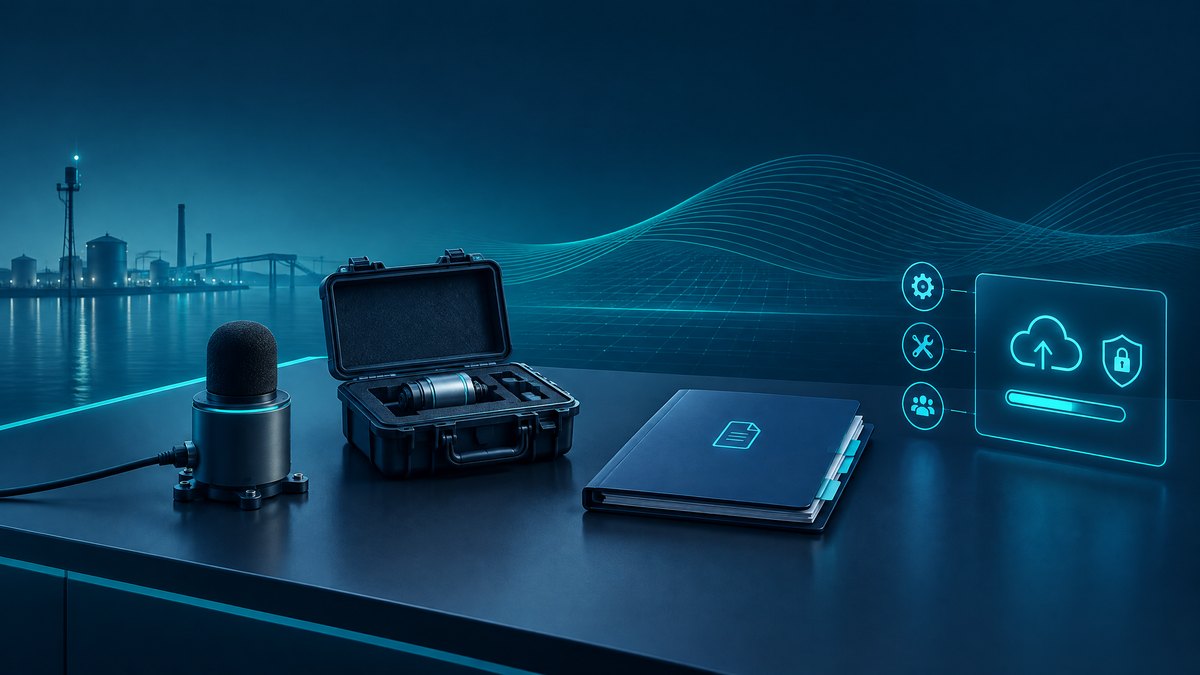
Select regional acoustic detection support through documented handover, escalation, integrator training, maintenance ownership, secure updates, and an agreed exit plan for civil infrastructure.
Define the Acoustic Drone Detection System Supplier handover
CISA's UAS detection buyer guidance asks about training, recurring costs, library updates, and long-term maintenance. Turn those questions into named contract deliverables before issuing the purchase order. The handover should establish the accepted configuration and the responsibilities needed to keep it supported, rather than leaving the operations team to reconstruct the sales discussion.
Receive a usable acceptance package
Request an equipment register with unit identifiers, installed hardware and software versions, configuration records, and agreed acceptance results. Include relevant installation documents, operator instructions, known limitations, and unresolved issues with owners and due dates. Decide which materials the buyer retains and which are available under confidentiality. Acceptance should acknowledge outstanding work explicitly rather than allowing delivery to imply complete readiness.
Separate supply scope from service scope
SonicVast's public page describes a qualified printed circuit board assembly and software development kit integration path. For a complete-system, original equipment manufacturer, or regional partner discussion, separately agree who supports the delivered configuration. Local attendance, training, spare holdings, and engineering escalation are scope items subject to agreement, not benefits implied by a supplier description. Name the contracting entity and each responsible service party.
Connect local support to accountable technical escalation
A nearby integrator can reduce travel and language friction, but geography does not establish engineering authority. Ask how a site issue moves from the local help desk to the party able to investigate it. The buyer should not have to coordinate competing explanations from several suppliers.
Distinguish acknowledgement from restoration
Define service hours, contact channels, severity categories, and the information required to open a ticket. Keep acknowledgement targets separate from investigation updates, site attendance, and restoration objectives. Agree who owns the ticket during escalation and how the buyer receives progress reports. Any timings must be negotiated for the project; a quick initial reply is not a promise of rapid repair.
Train the local integrator for its actual role
Specify a training syllabus covering approved configuration work, fault reporting, maintenance records, and secure handling of support data. Identify tasks reserved for the product engineering team. Request attendance records and a practical handover exercise, plus an agreed refresher route when staff change. Training should enable the integrator to support the accepted system without implying permission to make undocumented modifications.
Make spares and calibration responsibilities explicit
CISA notes that recurring detection-system costs may include maintenance or calibration. Do not assume a generic service fee covers every intervention. Establish the proposed product's documented maintenance requirements, who can perform the work, and which records demonstrate that returned equipment remains within the agreed configuration.
Agree spare custody and replacement logistics
If spares are required, state whether they are buyer-owned, supplier-owned, or shared stock. Agree storage responsibility, inventory reporting, replenishment triggers, and approval of replacement revisions. Address transport, customs, and return handling where regional support crosses borders. Require replacement and repair history to follow the unit so that a swap does not break the site's equipment register.
Keep calibration separate from performance acceptance
Ask whether calibration is required, what triggers it, and who owns the method and resulting records. Define authorized providers and the checks needed after repair or replacement. Calibration records do not by themselves establish detection performance at the facility. Where a change could affect accepted behavior, agree proportionate site rechecking and record who approves the return to service.
Treat updates and privacy records as continuing obligations
NIST's device cybersecurity catalog includes controlled configuration, data protection, restricted interface access, and secure updates by authorized entities. Use these as review prompts tailored to the proposed system, not as evidence of product compliance. Support arrangements should explain how cybersecurity responsibilities are shared with the facility's technology team.
Approve releases against the accepted baseline
Request release notices describing affected versions, relevant fixes, and changed dependencies or behavior. Agree who evaluates an update, approves installation, and records the resulting configuration. Establish a recovery approach appropriate to the product and a verification plan before deployment. Do not assume every update can be reversed or that a larger comparison library necessarily improves the site's results.
Document what support personnel can access
Ask whether support involves recordings, event metadata, configuration exports, or remote access, and document only the data flows actually proposed. Agree purpose, retention, storage location, access authorization, and deletion responsibilities. Keep access and change records where required by site policy. Review diagnostic-data sharing with privacy and security personnel before granting access, including arrangements for subcontractors and cross-border transfers.
Budget the supported period and agree an orderly exit
NIST's nontechnical support catalog describes lifecycle communications, customer education, and guidance for secure reprovisioning or disposal. A civil buyer should therefore discuss support expiry while negotiating procurement. The contract needs a clear ending as well as a workable beginning, especially when a regional partner may later change.
Price the work that keeps the system supported
Compare costs over the same buyer-defined planning period. Separate equipment, recurring services, refresher training, spare replenishment, maintenance travel, and any agreed update charges. Record exclusions and the basis for price changes. Confirm support dates and the notice process for discontinued parts or services. Optional work should remain visibly optional rather than disappearing into an undefined lifecycle allowance.
Preserve records and remove obsolete access
Agree which configuration and maintenance records transfer to the buyer, their usable format, and any license or confidentiality restrictions. Assign final data export, retention or deletion, remote-access removal, and disposal responsibilities. Where another service provider takes over, define the transition assistance and its cost. Choose an Acoustic Drone Detection System Supplier whose agreed deliverables support the facility through that final handover, not merely through installation.
Use the guide in civil service procurement
Apply these questions to the proposed regional service arrangement. Request a responsibility schedule and priced deliverables before treating local presence as lifecycle coverage.
Discuss an acoustic projectGeneral procurement guidance, not certification or legal advice. Product capability, installation suitability, service availability, and support commitments require project-specific review and agreement.