
TECHNOLOGY INSIGHT / ANALYTIC RF
Analytic RF C-UAS Solution for Modern Drone Security
Analytic RF can support civil low-altitude safety by turning authorized radio-environment observations into contextual evidence for trained human decision-makers, while remaining subject to local law, privacy safeguards, electromagnetic-compatibility requirements, and…
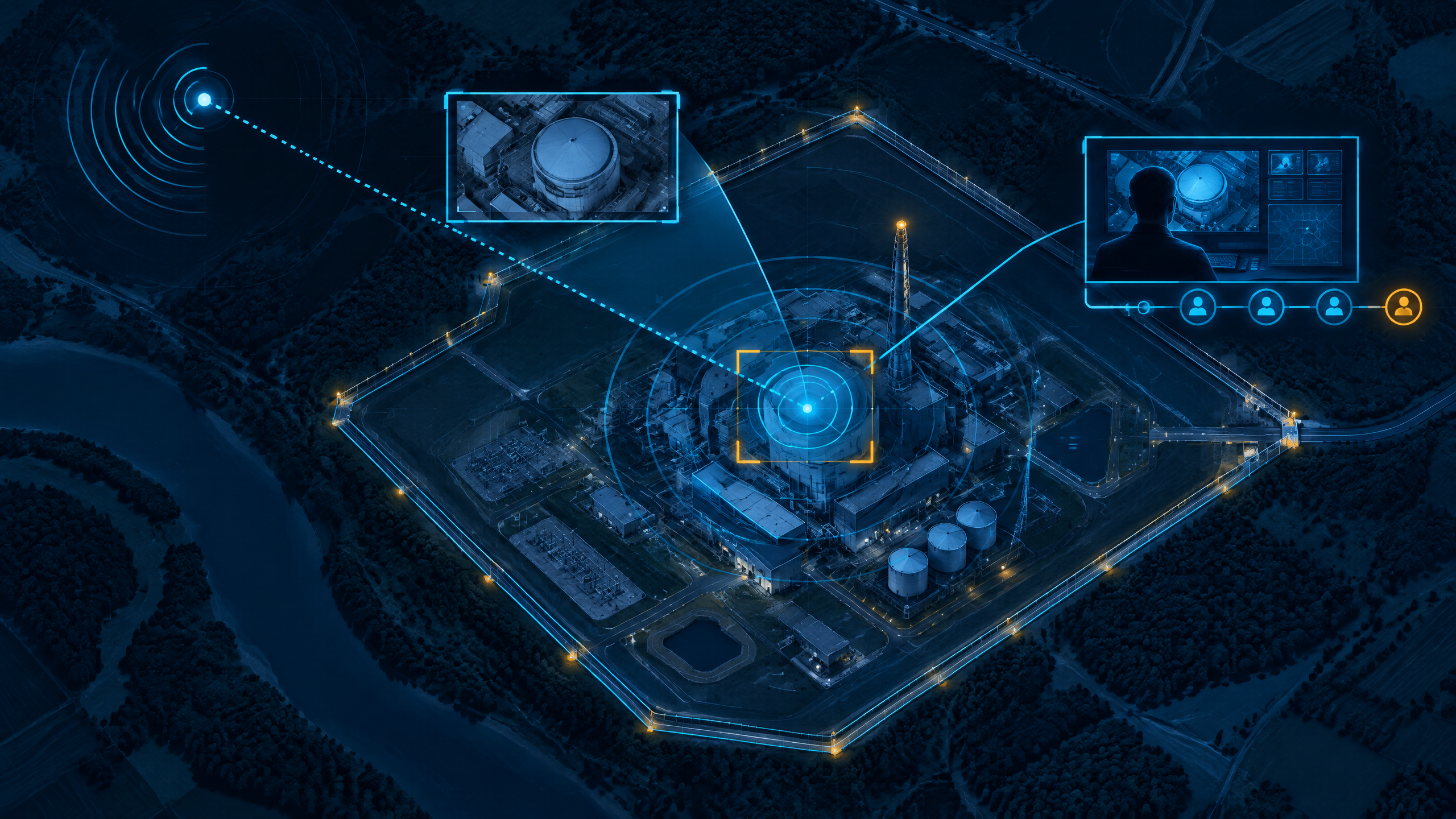
Analytic RF can support civil low-altitude safety by turning authorized radio-environment observations into contextual evidence for trained human…
TECHNICAL PRINCIPLE / LAYER → CORRELATE → GOVERN
Analytic RF technical principle
One signal layer inside a modern safety picture.
RF awareness contributes a distinct context source that should be correlated with site procedures and other lawful observations.
Add a separate information source
RF awareness sits beside acoustic, visual and site-operational context rather than replacing them.
Keep sources independently visible
Time alignment can support a review while preventing one sensor from silently becoming the conclusion.
Route through accountable roles
A defined safety objective, access boundary and human owner keep the workflow proportionate and auditable.
Civil safety infographic / For understanding and review; not a spectrum-action or response guide.
Public-safe summary
Analytic RF can support civil low-altitude safety by turning authorized radio-environment observations into contextual evidence for trained human decision-makers, while remaining subject to local law, privacy safeguards, electromagnetic-compatibility requirements, and site-specific governance.
From isolated alerts to contextual awareness
Modern drone safety is not simply a question of detecting an object. Airports, energy and port facilities, industrial sites, and other sensitive locations need a defensible understanding of what an alert may mean within the broader operating context. Analytic RF is one component of that picture: at a high level, it helps authorized teams recognize relevant signal activity and relate observations to time, location, procedures, and other available evidence. The value is therefore analytical rather than automatic. A signal observation can help an organization decide whether to request additional verification, apply a pre-approved safety procedure, or document an event for later review. It should not be treated as identity proof, intent determination, or an instruction to act on its own.
A responsible role in multi-sensor systems
RF awareness is most useful when integrated with complementary sources such as visual observation, approved tracking data, site reports, and environmental or operational information. Multi-sensor fusion can help analysts compare independent observations, identify uncertainty, and preserve a clear record of how an assessment was reached. System integration should use defined interfaces, access controls, audit trails, and clear ownership of decisions. A vendor-neutral program also avoids presenting one sensor or analytic method as universally sufficient. Performance and suitability depend on the local radio environment, building and terrain conditions, lawful data access, operating procedures, and the quality of human review. Evaluation should focus on evidence quality, explainability, interoperability, and safe escalation—not on unsupported claims of certainty.
Governance principles for civil low-altitude safety
Airports, energy and port facilities, and industrial sites should define the safety objective, accountability boundaries, records, and escalation path before deciding how Analytic RF can contribute one authorized input to multi-source awareness.
Discuss an RF Governance ReviewEditorial note: this article is civil, compliance-first technology education only, not operational instruction or legal advice. Any RF observation, data handling, or follow-on action must remain within local authorization, electromagnetic-compatibility, privacy, aviation, and site-governance requirements, with qualified human review.