
SECURITY OPERATIONS / C-UAS
How C-UAS Technology Supports Security Operations at Critical Infrastructure Sites
At a critical-infrastructure site, low-altitude airspace is part of the security picture—but it is not a standalone technology problem. A responsible C-UAS program connects detection context, operator judgment, authorization, records, and existing security processes without turning an uncertain signal into an automatic conclusion.
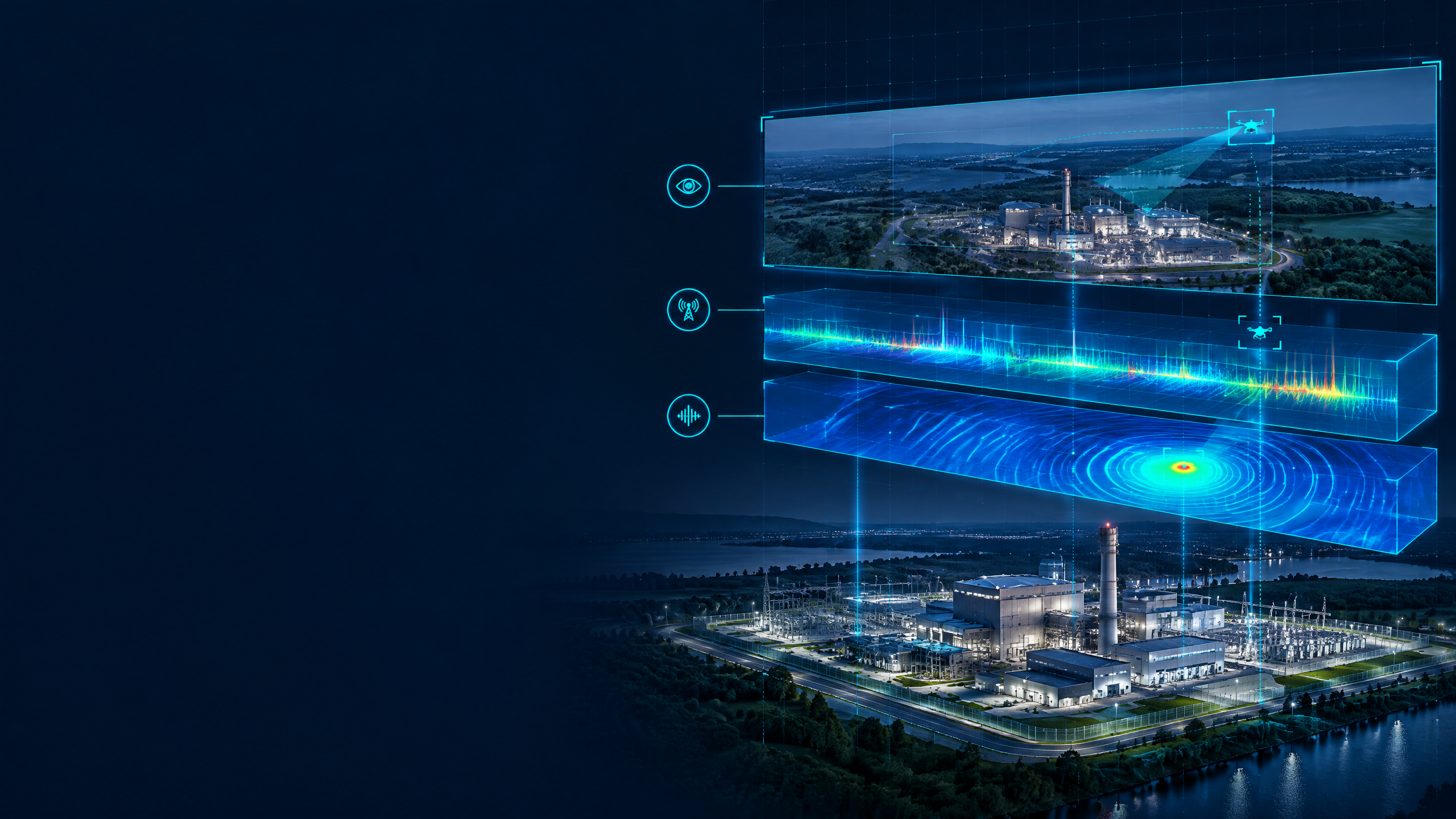
A compliance-first guide to using C-UAS technology as a governed layer of situational awareness, human review, and accountable response within critical-infrastructure security operations.
Start with an airspace picture, not a product list
Begin with the site’s safety, privacy, access, and continuity requirements. A C-UAS architecture may combine RF awareness, optical or EO/IR review, acoustic context, and existing access or video systems, but each input has limits. Buildings, weather, interference, authorized activity, and changing site conditions can affect observations. Treat an alert as a prompt for assessment, not proof of intent or identity.
Make human review the control point
Detection should create a reviewable case with time, location, confidence context, sensor provenance, and relevant site conditions. Trained personnel should compare the event with authorized flight information and other available evidence, record what remains unknown, and escalate through the site’s approved chain. Automation can prioritize attention; it should not replace accountable human judgment.
Connect C2 to permissions and records
Integrate C-UAS workflows with the organization’s C2, incident management, and access-control practices through documented permissions and an auditable API design. Define who may view, annotate, share, retain, or delete event data. Separate routine monitoring from any action that could affect safety, privacy, communications, or third parties, and require explicit authorization before such action is considered.
Prove fit at the site and revisit it
Validation is site-specific. Test representative conditions with the asset owner, safety stakeholders, privacy or legal reviewers, and integrator teams before relying on the workflow. Measure whether alerts are understandable, whether records support investigation, and whether staff can follow escalation and fail-safe procedures. Reassess after construction, policy, sensor, network, or airspace changes; a previously useful configuration is not a permanent guarantee.
Where this approach applies
Use this framework when an airport-adjacent facility, energy site, water plant, transport node, data center, or other critical asset needs a defensible way to understand low-altitude activity and coordinate security review. Adapt terminology, permissions, escalation, and validation to local law, regulator direction, emergency plans, labor practices, and the site’s existing control room. It is not a substitute for legal advice, aviation authority guidance, or a site risk assessment.
Build a C-UAS operating concept around your site’s risks, authorities, and evidence requirements. Ask SonicVast for a requirements workshop that maps sensing, human review, governance, integration, and validation before any deployment decision.Educational content only. SonicVast does not provide legal, aviation, emergency-response, or security authorization through this article. Site owners and qualified professionals remain responsible for compliance, human oversight, data governance, and validation of any C-UAS workflow.