
SONICVAST / LOW-ALTITUDE SECURITY
Designing a Drone Detection Network for Large-Scale Industrial Facilities
Large industrial facilities cannot treat drone awareness as a single-sensor purchase. A defensible design starts with the site’s safety and privacy obligations, maps where uncertainty matters, and then connects complementary observations to a governed review process. The objective is not to promise certainty; it is to make each alert explainable, reviewable, and appropriate to the facility’s authorized purpose.
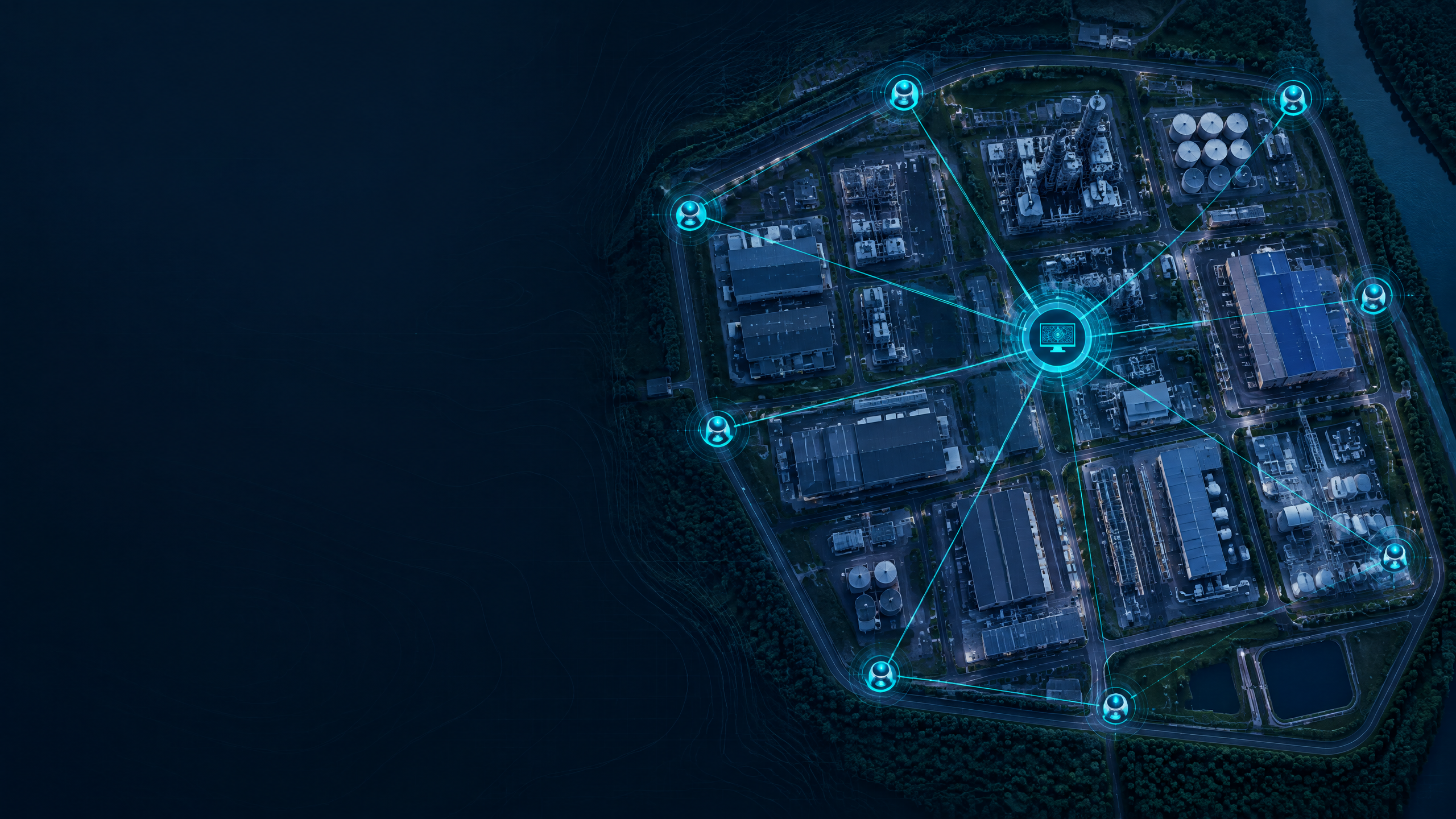
A compliance-first framework for planning a site-specific drone detection network that combines acoustic, optical, and RF observations with human review, authorization controls, and accountable data governance.
Start with an uncertainty map
Document the facility’s normal soundscape, restricted areas, operating hours, weather sensitivities, and sources of nuisance alerts before selecting equipment. Acoustic sensing can add useful context, but machinery, vehicles, and construction may overlap with relevant signatures. Define what the system may indicate, what it cannot establish, and when a person must review an event.
Use visual review with restraint
EO/IR observation can help a reviewer assess whether an alert has a visible explanation, subject to lawful placement, retention, and access controls. Plan sight lines around worker privacy, lighting variation, obstructions, and safe maintenance. A visual observation should support a documented decision rather than become an automatic conclusion about identity, intent, or authorization.
Treat RF as contextual evidence
RF observations may provide context about an emitting device or local spectrum conditions, but they are not a universal answer and may be incomplete, ambiguous, or affected by the site environment. Establish approved collection boundaries, spectrum-management responsibilities, timestamp quality, and confidence language. Do not infer authorization or intent from an RF observation alone.
Make the review path auditable
Connect observations through a C2 or API layer only after defining roles, escalation thresholds, audit events, and failure handling. A reviewer should be able to see the source, time, confidence, and relevant site context without receiving more personal data than necessary. Validate the design in representative conditions, record exceptions, and revisit it when the facility, policy, or threat assumptions change.
Where this framework applies
Use it when integrating civil low-altitude awareness around manufacturing campuses, energy and utility sites, logistics hubs, process plants, ports, or other large facilities that need accountable observation. It is most useful during requirements definition, architecture review, pilot planning, and governance sign-off. It is not a guide to countermeasures, interception, tactical deployment, or response beyond an organization’s authorized safety and reporting procedures.
Bring your site constraints, privacy requirements, and review workflow to a SonicVast systems conversation. We can help structure a validation plan that keeps uncertainty visible and authorization explicit.SonicVast provides this material for civil security education. It contains no operational countermeasure guidance and makes no claim about detection range, numeric performance, or suitability for a particular site. Consult qualified legal, privacy, safety, spectrum, and cybersecurity professionals before deployment.