
INTEGRATOR DELIVERY / LOCALISATION
Localized OEM and ODM Delivery for Civil Low-Altitude Awareness Systems
Local assembly and OEM/ODM collaboration can help integrators match a project’s service, language, form-factor and support requirements. They do not eliminate the need for documented quality control, configuration management, cybersecurity, export compliance, privacy and safe acceptance testing. A responsible delivery model keeps core evidence, interface contracts, support responsibility and change history visible across supplier, integrator and owner roles. This brief discusses those governance questions only; it does not include build instructions, tactical deployment or performance claims.
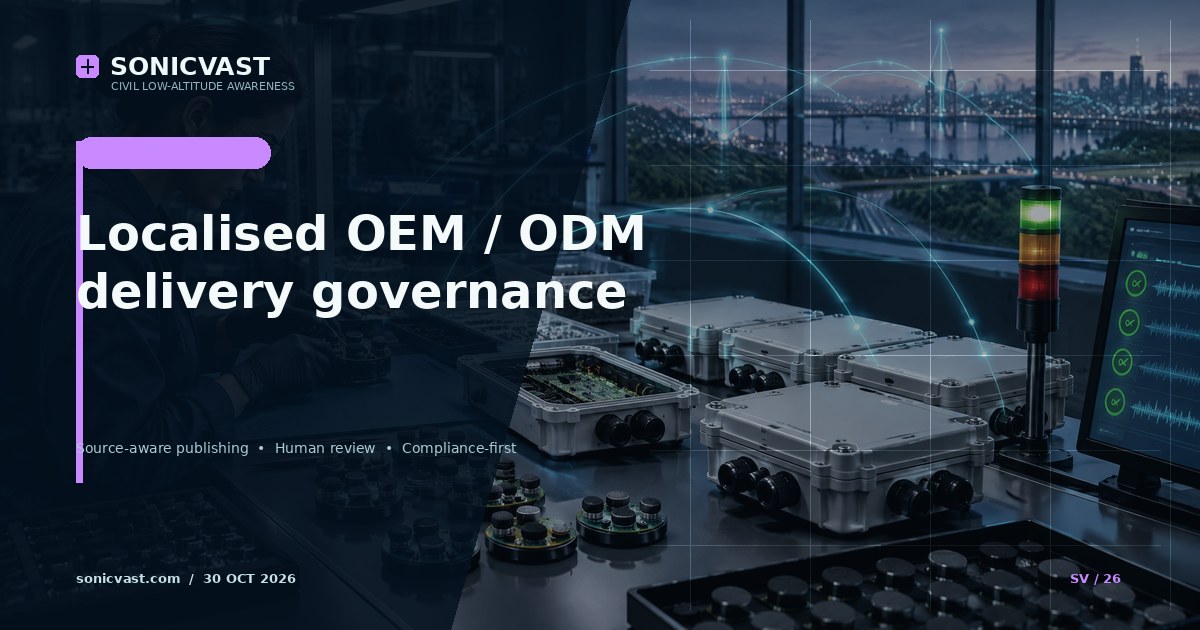
A civil, lifecycle-focused guide to local assembly, open interfaces and OEM/ODM delivery that preserves quality, evidence and responsible ownership.
Define what the supplier, integrator and owner are each accountable for.
Before localisation, record who owns product quality, approved substitutions, firmware or software provenance, language localisation, data handling, support and warranty commitments. Partner flexibility should never make responsibility ambiguous to the end owner.
Open integration works when interfaces are versioned and accountable.
A documented API or SDK can support legitimate integration with approved software, sensors or common operating views. Define permissions, version compatibility, data minimisation, cybersecurity review, audit logs and a deprecation path before a project handover.
A sustainable local delivery model is maintained after handover.
Use acceptance evidence appropriate to the lawful civil purpose, provide training that reinforces human review, and maintain authorised service, update, incident and correction processes. Each change should preserve traceability rather than resetting it.
Make the delivery contract readable across roles
Maintain versioned interfaces, authorised change control, test evidence, support ownership and escalation paths from factory to facility.
Discuss a civil, compliance-first systems-integration review with SonicVast.Editorial boundary: this civil technical brief covers compliance-first awareness, human review, evidence governance, privacy, cybersecurity and lifecycle assurance. It does not provide tactical deployment, sensitive specifications, interference, interception, targeting, response procedures or performance guarantees. Every site requires qualified local legal, aviation, safety, privacy, cybersecurity and engineering review.