
TECHNOLOGY INSIGHT / MULTI-SENSOR AWARENESS
Multi-Sensor Drone Detection: Acoustic, RF, Radar and EO/IR Evidence
Low-altitude airspace is a shared civic environment, so detection should begin with restraint and evidence. Acoustic sensing may register sound patterns; radio-frequency sensing may indicate transmissions; radar may describe movement-related reflections; and electro-optical or infrared cameras may add visual context. Each channel is shaped by its surroundings, equipment limits, weather, privacy obligations, and ordinary activity. Combining these observations can help reviewers compare independent clues, record uncertainty, and avoid treating one alert as proof. The result is a structured awareness process for authorized personnel, with human review and documented escalation. Sensors support judgment; they do not decide identity, intent, authority, or what anyone should do next.
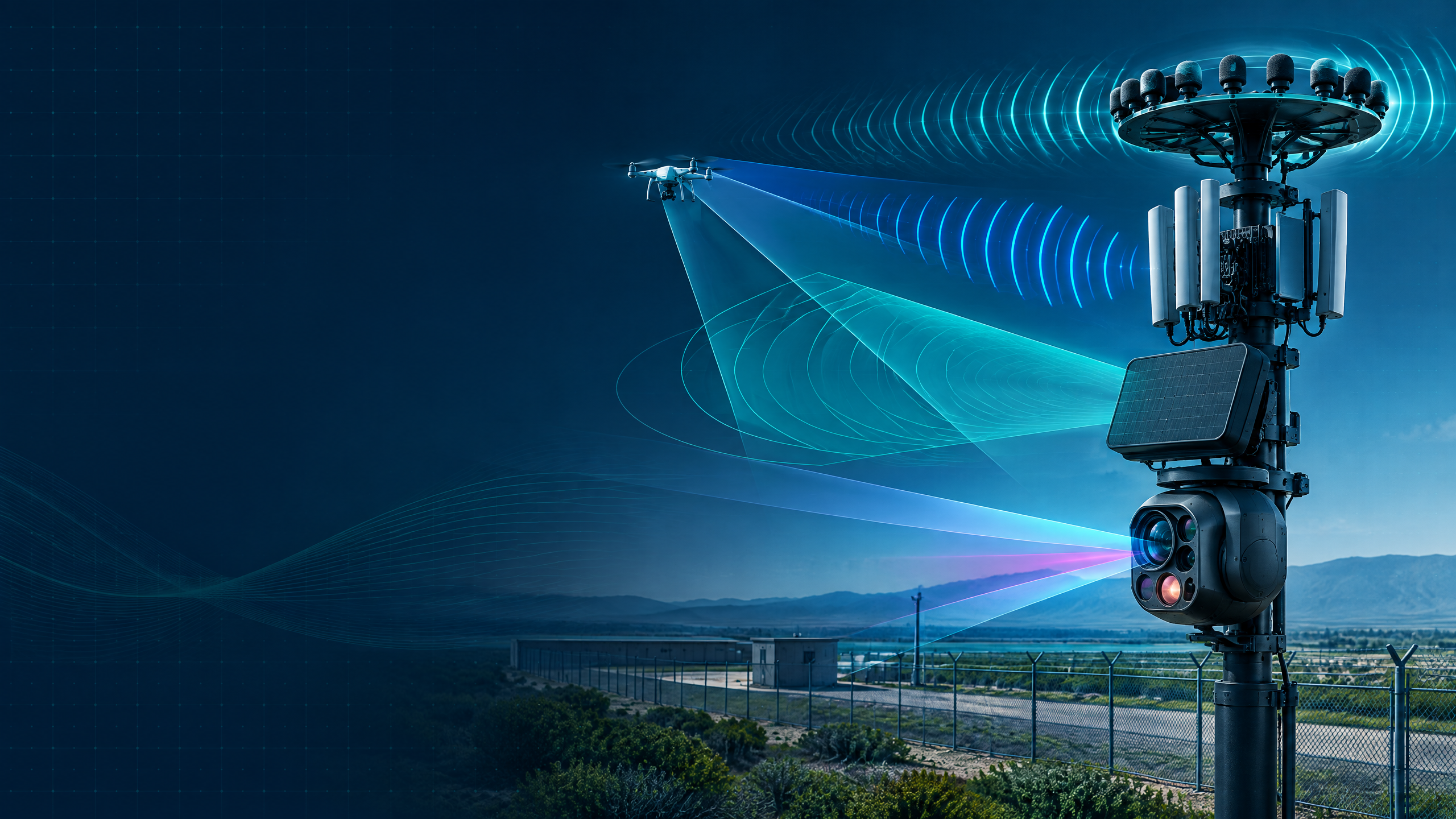
A civil-safety approach to drone awareness combines acoustic, radio-frequency, radar, and electro-optical/infrared observations. The aim is contextual review, lawful escalation, and accountable decisions—not automatic identity, intent, authority, or response conclusions.
Acoustic and RF Context
Acoustic and radio-frequency inputs can broaden awareness without being treated as signatures of a particular aircraft or operator. Microphones may hear overlapping traffic, machinery, wind, or ordinary aircraft noise. RF receivers may observe a changing communications environment, yet a transmission alone does not establish who is present, why it is present, or whether activity is authorized. Civil programs should document collection purpose, retention limits, access controls, and environmental factors that can distort interpretation. Reviewers can compare time-aligned observations with site records and reported events, while preserving uncertainty. These channels are most useful as contextual evidence alongside other lawful observations, not as a basis for naming, pursuing, or classifying a person or device.
Radar Evidence and Environmental Review
Radar can contribute a non-visual account of reflections and movement in a monitored area, but reflections are not identities. Buildings, birds, weather, terrain, and other permitted activity may influence what is observed. A responsible review records the observation, its confidence, relevant conditions, and the limits of the sensor rather than presenting an alert as a confirmed drone. Radar information should be reconciled with authorized site knowledge and other sensor records through a documented human process. The purpose is to support proportionate awareness and safety coordination, with privacy and legal safeguards. It is not a blueprint for tracking, interception, or operational response, and it should never replace competent authorities or established emergency procedures.
EO/IR Confirmation and Evidence Fusion
Electro-optical and infrared imagery can add visual or thermal context when conditions permit, but images may be incomplete, ambiguous, or affected by lighting, weather, distance, and privacy boundaries. Evidence fusion should preserve the provenance and timing of each observation, distinguish direct observation from inference, and show disagreement rather than conceal it. A reviewer can ask whether the combined record supports a safety concern, what remains unknown, and which authorized office should assess it. Access to imagery should be limited to a legitimate purpose, with retention and disclosure controls. Fusion is a disciplined way to organize complementary evidence; it is not automated identity, intent, authority, or response adjudication.
Use in Civil Safety Programs
Use multi-sensor outputs to support situational awareness, facility reporting, safety coordination, and post-event learning. Present observations with timestamps, uncertainty, environmental context, and source limitations. Require trained human review before any escalation, and apply the least intrusive lawful process available. Do not use the system to identify people, infer intent, direct pursuit, interfere with communications, or authorize interception. The appropriate outcome may be continued observation, documentation, or referral to competent authorities.
For a compliance-focused civil-safety assessment, message our team on WhatsApp to discuss governance, sensor evidence review, and responsible integration.This article is general information, not legal, aviation, security, or emergency-response advice. Follow applicable law, privacy requirements, site policy, and instructions from competent authorities.