
TECHNOLOGY INSIGHT / MULTI-SENSOR AWARENESS
Why No Single Sensor Can Detect Every Type of Drone
A drone may be quiet, small, visually obscured, electronically unfamiliar, or simply blended into a complex background. That variability makes universal detection by one sensor unrealistic. Radar, radio-frequency observation, optical or thermal imagery, acoustic sensing, and contextual records each reveal different parts of an event, while each also has blind spots. A civil low-altitude security program should therefore treat sensor output as evidence for review—not as a final identity, intent, authority, or response decision. The practical question is not which sensor is best in isolation, but whether a proportionate, documented process can compare observations, protect privacy, and route uncertainty to an authorized human decision-maker.
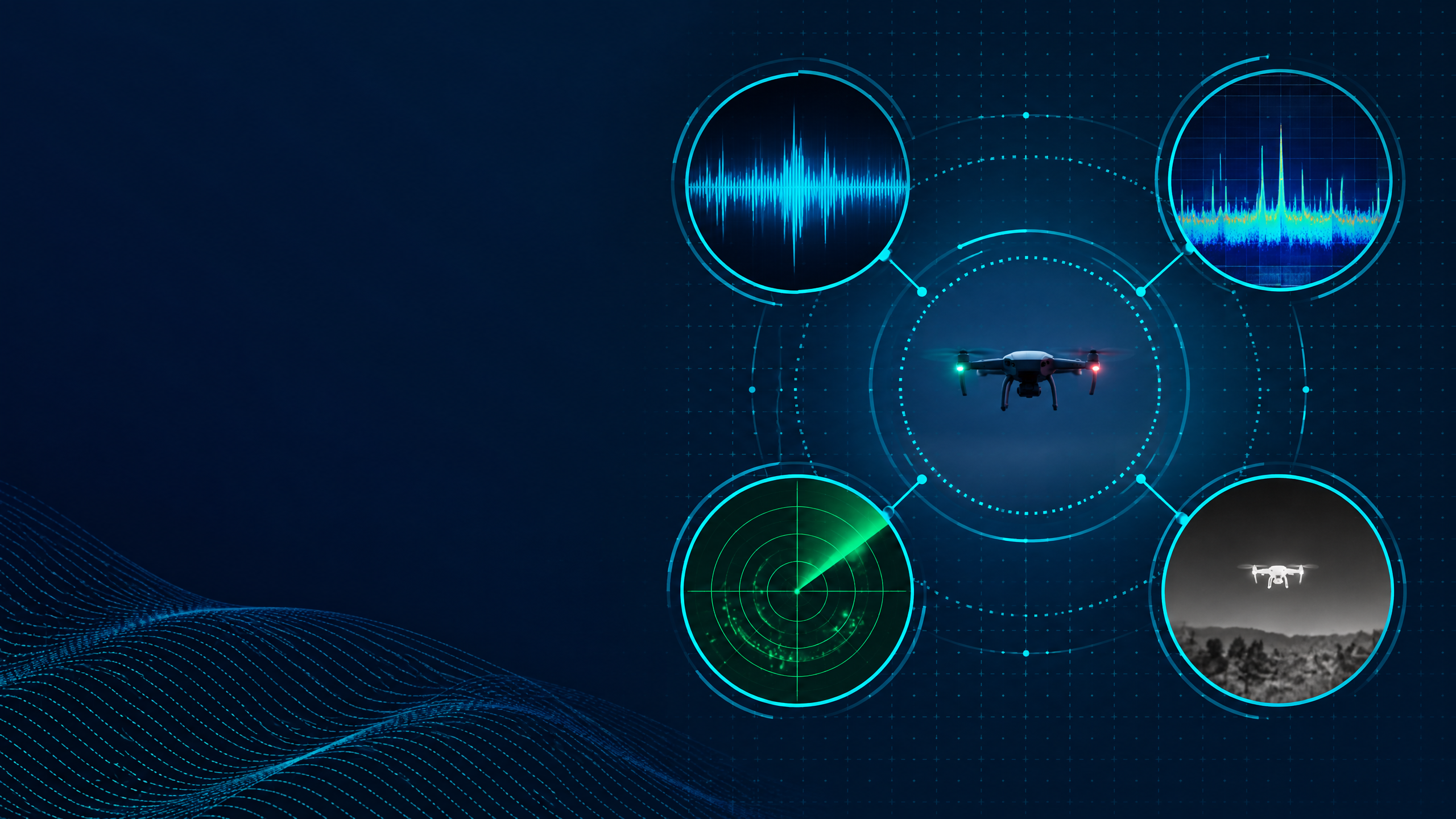
Drone awareness is a civil-safety evidence problem, not a single-device promise. Different aircraft, environments, and operating conditions expose different signals, so responsible review combines complementary observations with governance.
Different Physics, Different Blind Spots
Sensors observe different physical signatures. Radar may notice motion or reflective structure, while radio-frequency sensing depends on an observable transmission. Cameras can contribute shape, color, and context when line of sight and lighting cooperate; thermal imagery responds to heat contrasts; acoustic sensing depends on sound propagation and background noise. A drone can therefore be detectable to one modality and inconspicuous to another. Weather, buildings, vegetation, distance, interference, calibration, and lawful access to data further change what an observation means. These are not reasons to promise a perfect sensor. They are reasons to document coverage limits and interpret each observation within its operating context, without turning a signal into an unsupported conclusion.
Evidence Must Be Correlated, Not Assumed
Combining modalities can make review more informative, but correlation is not automatic identity. Time alignment, location quality, data provenance, duplicate reports, and conflicting readings all matter. A visual object may be a bird, aircraft, weather artifact, or drone; a radio signature may belong to a nearby device rather than the object of interest. Sound and motion can also be misattributed in dense urban settings. A sound process records what each sensor actually observed, states confidence and uncertainty, and preserves an auditable rationale for any classification. Human reviewers should be able to challenge an interpretation, request additional lawful context, and avoid escalating solely because several imperfect signals appear at once.
Detection Is Not Identity or Intent
Even a well-supported detection does not establish who operates an aircraft, whether a flight is authorized, what the operator intends, or what response is lawful and proportionate. Those questions require separate checks against approved records, site rules, aviation requirements, privacy safeguards, and incident procedures. Civil systems should minimize unnecessary collection, restrict access, retain records for defined purposes, and provide an accountable review path for errors. The goal is a measured awareness workflow: notice, contextualize, verify through authorized channels, document uncertainty, and refer decisions to designated personnel. No sensor, fusion display, or automated label should substitute for governance, due process, or emergency services when applicable.
Use Evidence to Support Safe Review
Use sensing to support lawful awareness, site safety, and clear escalation paths. State the purpose before collecting data, select complementary evidence appropriate to the environment, test for blind spots, and communicate uncertainty plainly. Do not use this framework to track individuals, identify operators without authorization, interfere with aircraft, or make automated enforcement decisions. When risk is unclear, follow the responsible authority’s documented process and prioritize public safety, privacy, and accountability.
For a compliance-first civil-safety review, message our team on WhatsApp.This article is general safety information, not legal, aviation, security, or emergency-response advice.