
SONICVAST FIELD NOTE
Designing an Acoustic Detection Network for Large Industrial Sites
Large industrial sites are acoustically complex: machinery, vehicles, weather, structures, and work activity can all resemble an alert. A useful acoustic network is therefore not defined by a single sensor or a dramatic claim. It is defined by disciplined placement, traceable data handling, human review, and validation against the conditions the site actually presents.
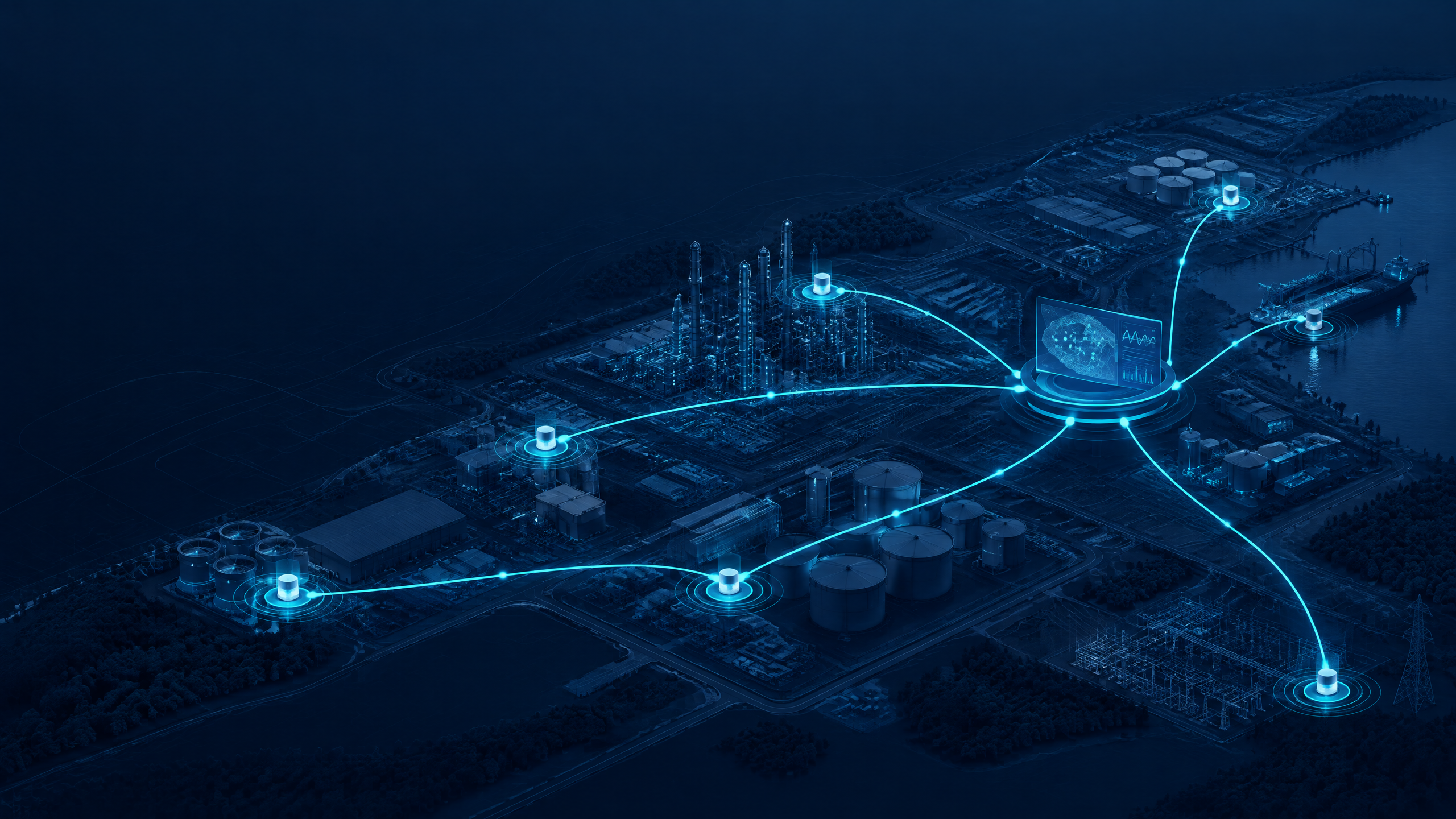
A compliance-first framework for using distributed acoustic sensing as one reviewed input in a site-specific low-altitude security program.
Start with the acoustic question
Document what the program is authorized to observe, what decisions an alert may support, and what it must never decide on its own. Map persistent sound sources, quiet periods, occupancy patterns, restricted areas, and safety constraints before selecting equipment. Treat an acoustic event as an observation requiring context—not as proof of an object, intent, or violation.
Design for corroboration, not automation
Acoustic detections become more useful when a governed workflow can request review from other approved systems, such as EO/IR or access-control records, where lawful and proportionate. Correlation should preserve the original observation, record timing and confidence as uncertainty, and route ambiguous cases to trained personnel. No sensor combination should bypass authorization or human accountability.
Make data governance part of the topology
Define collection boundaries, retention, encryption, access roles, audit logs, incident escalation, and deletion rules before deployment. Prefer the least data needed for the approved purpose, and separate diagnostic material from routine alerts. If an API connects the network to C2 or other enterprise systems, document the interface, permissions, failure behavior, and change-control owner.
Validate where the site is difficult
Test across representative weather, machinery states, construction phases, traffic patterns, and authorized work activity. Measure whether reviewers can understand and resolve alerts, not merely whether a model produces them. Record false-alert drivers, missed-context cases, maintenance needs, and environmental changes; then set a review cadence that can pause or revise the service when evidence no longer supports its use.
Where this approach applies
The framework is suitable for early architecture and governance discussions involving ports, utilities, manufacturing campuses, logistics yards, energy facilities, and other large industrial environments. It is not a substitute for a risk assessment, an acoustic survey, an RF or C-UAS policy, emergency procedures, or applicable regulatory review. Integrators should adapt the design to local acoustics, consent requirements, worker protections, network resilience, and the site's approved response model.
Bring the site question, authorization boundary, and review workflow to SonicVast. We can help teams turn them into a documented, testable acoustic-network brief before any procurement or integration decision.Disclosure: This educational record is general information for civil security planning. It contains no operational instructions, sensitive specifications, countermeasure guidance, or verified third-party claims. Final decisions require qualified professionals, documented authorization, and site-specific validation.