
SONICVAST / PROFESSIONAL PRACTICE
Acoustic and RF Sensor Fusion for Professional C-UAS Applications
Sensor fusion is not a shortcut to certainty. For a professional C-UAS program, acoustic and RF inputs should be treated as complementary observations whose meaning depends on context, calibration, lawful configuration, and accountable review.
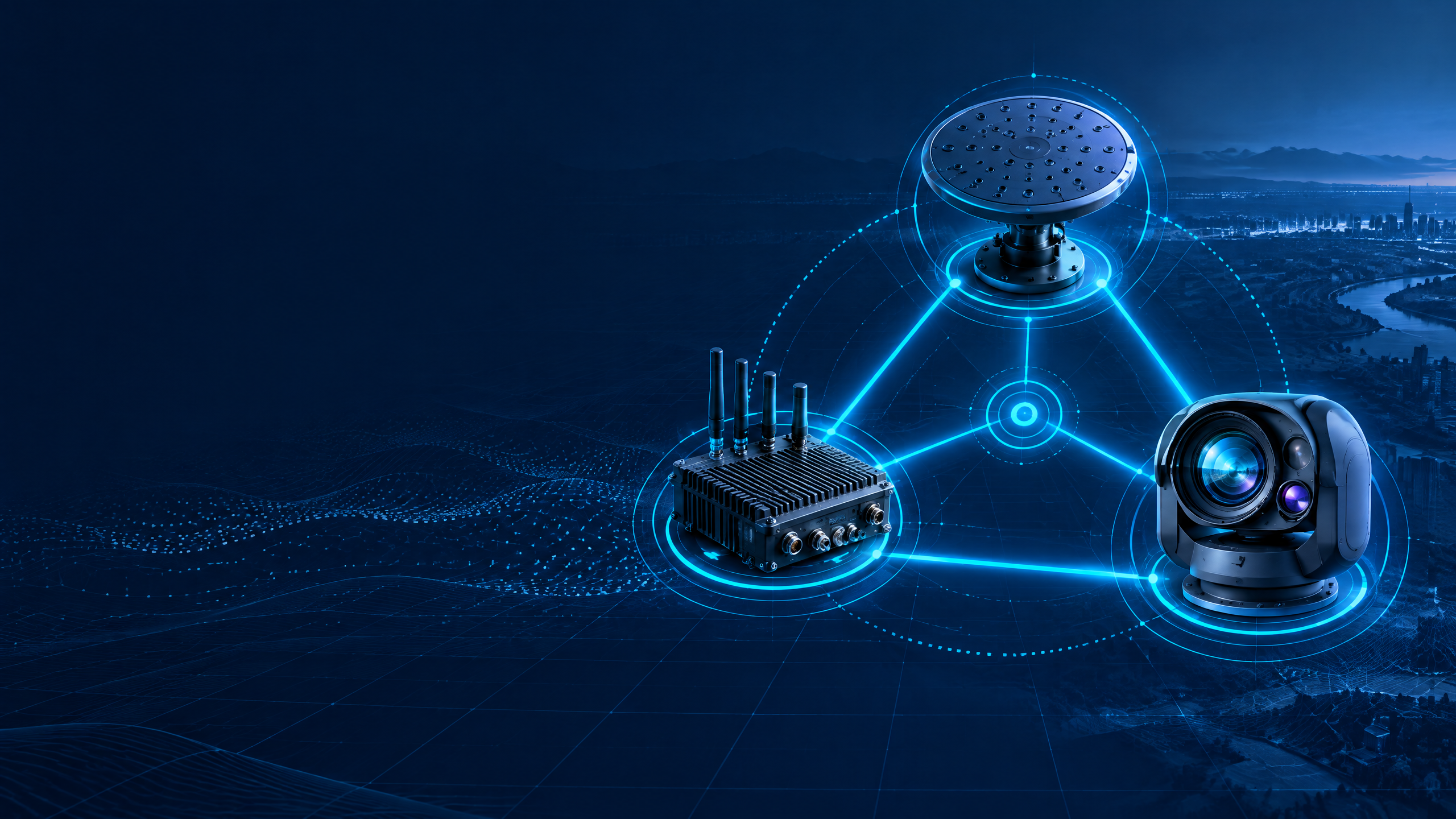
A compliance-first guide to combining acoustic and RF observations for civil low-altitude security, with human review, authorization, data governance, and site-specific validation at the center.
Listen for context, not conclusions
Acoustic sensing can add environmental context where sound is observable, but it is affected by weather, architecture, machinery, traffic, and ordinary human activity. Integrators should document the listening environment, expected nuisance sources, calibration approach, and conditions that can produce an ambiguous observation. An acoustic event is a prompt for review, not proof of identity, intent, or authorization.
Treat RF as a governed input
RF observations may help characterize local signal activity when collection is lawful and proportionate. A professional design must define what is permitted to be observed, how access is controlled, how data is minimized, and how retention is limited. RF data should never be presented as a definitive attribution without documented validation and an authorized human decision process.
Fuse evidence with visible uncertainty
Fusion should preserve the provenance, timestamp, confidence, and limitations of each input instead of collapsing them into an opaque score. Corroboration can reduce ambiguity, but disagreement between sensors is itself meaningful evidence. Interfaces should make uncertainty legible, route material cases to trained reviewers, and record the reasoning behind any escalation or closure.
Connect systems without losing accountability
An integration layer or API should carry policy, identity, audit, and health information alongside observations. Role-based access, change control, test records, and failure handling belong in the design before production use. Site teams should be able to pause automated handling, inspect the record, and demonstrate who authorized each consequential action.
Applicability and validation
The approach is relevant to airports, utilities, campuses, logistics sites, and other controlled civil environments where low-altitude awareness supports safety and continuity. Suitability is site-specific: validate against local soundscapes, RF conditions, architecture, weather, privacy expectations, staffing, maintenance, and incident-governance procedures. Begin with a bounded evaluation, define acceptance criteria with stakeholders, and revisit them as the site changes.
Build a reviewable sensor-fusion brief with SonicVast: map authorized data, document uncertainty, and validate the workflow with the people responsible for safety, privacy, and continuity.Disclosure: This is general educational material, not legal, regulatory, safety, or security advice. SonicVast makes no performance, coverage, attribution, or suitability claim. Seek qualified counsel and complete site-specific validation before any deployment or decision process.