
ACOUSTIC SENSING / ENGINEERING AND PROCUREMENT
What Belongs in an Acoustic UAV Detection Equipment Inventory?
An acoustic UAV detection equipment inventory should be more than a count of microphones. It should show what hears the environment, what timestamps and transports the data, what protects the hardware outdoors, what can be used to check it, and which records establish its current status. That structure helps a civil infrastructure buyer compare quotations and plan handover without confusing a bench component with a field-ready asset.
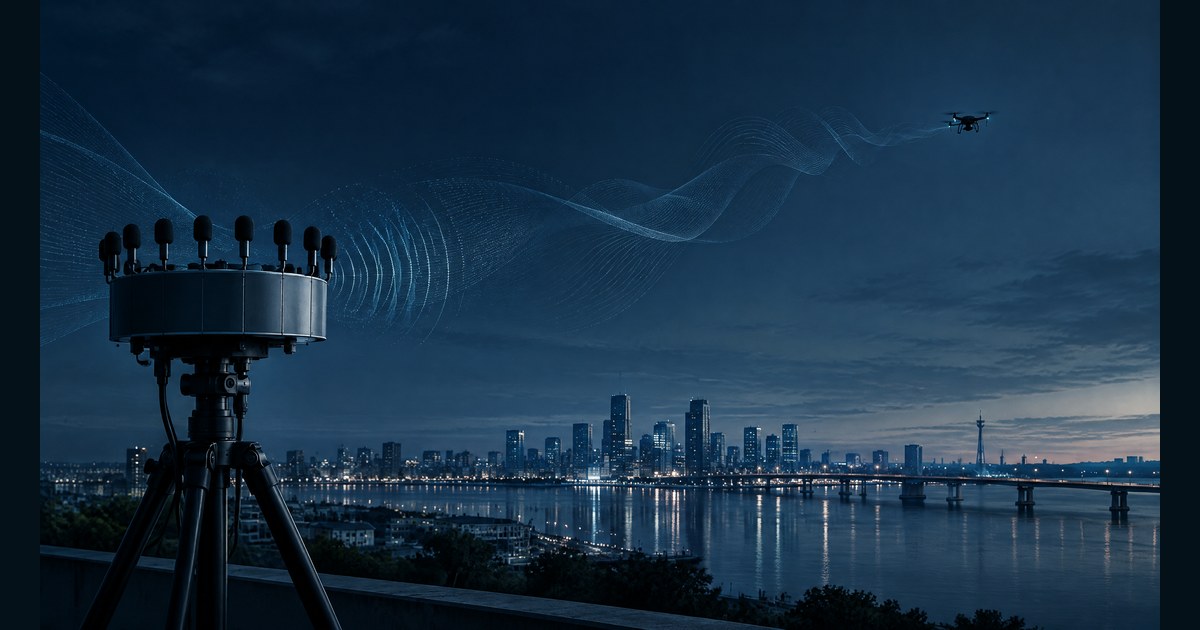
A procurement-oriented inventory framework for identifying acoustic sensing assets, supporting infrastructure, environmental accessories, test equipment and the records needed to keep every item accountable.
Start with an asset identity, not a product name
Give each physical or software-controlled item a durable identity. A model name alone can be ambiguous after a revision, repair or site transfer. The inventory should connect the item to its serial number or other unique identifier, functional role, installed location or storage location, owner, and current status.
Separate the acoustic chain into accountable items
At minimum, distinguish the microphone or acoustic transducer, array frame or mounting hardware, preamplifier or signal-conditioning stage, multichannel acquisition unit, processing computer or edge device, network or fibre interface, power equipment, and any enclosure. If several microphones are sold as one array, retain both the array assembly identity and the identity of each replaceable channel. This makes a channel fault, connector change or calibration event easier to trace.
Record configuration as well as location
Location alone does not describe an acoustic asset. Record channel mapping, orientation reference, mounting arrangement, firmware or software version, gain settings, sampling configuration and time source where those values affect the data. A relocated array may still be the same asset, but its configuration and site record should show what changed.
Include the timing and data path
An acoustic system can produce useful observations only if its signals can be acquired, associated and reviewed. The inventory therefore needs the infrastructure that preserves timing and data continuity, not just the microphones at the edge.
List synchronization and acquisition hardware
Identify the clock or time-reference source, synchronization receiver or interface, channel count, acquisition hardware, storage media and any network switch or gateway that carries the data. NASA acoustic test documentation describes remote units using a GPS receiver to obtain a common time code for synchronizing acoustic data with vehicle tracking. The inventory lesson is broader: record the time-reference method and its dependency rather than writing only “synchronized” as a checkbox.
Make software dependencies visible
Record the software or firmware release, device drivers, configuration files, signal-processing package, alert or review interface, and backup location for approved settings. This does not establish that a particular system has a specific feature. It gives the project team a place to verify the actual release and preserve a reproducible configuration during handover.
Treat outdoor protection as inventory, not an afterthought
Outdoor acoustic equipment interacts with wind, rain, dust, temperature and mounting vibration. Protection accessories should be identifiable assets because a missing or substituted accessory can change data quality or the equipment’s service condition.
Track windscreens, rain protection and enclosures
List the windscreen or other microphone protection, rain shield, environmental enclosure, cable glands, drainage provisions and mounting hardware associated with each outdoor channel. The National Park Service acoustical monitoring manual notes that wind can create turbulence around a microphone and affect measurements even when a foam windscreen is used. That is a reason to record the protection fitted and the environmental conditions observed, not a basis for promising a universal operating limit.
Record environmental observations with the asset
Add the site’s temperature, precipitation, wind and unusual noise context when equipment is installed, inspected or removed. A weather record does not prove a detection result, but it helps explain why two observations are not directly comparable. Also record visible contamination, moisture ingress, corrosion, damaged seals and cable strain as condition fields rather than burying them in free-text notes.
Add the tools that verify readiness
A credible inventory includes the items used to check the sensing chain before and during service. These are not the same as outdoor qualification or a site acceptance test. They are controlled tools and evidence inputs for understanding whether an asset is in a known condition.
Identify calibrators and reference equipment
List the sound calibrator, reference microphone or other approved test source, adapters, cables and measurement instruments used for checks. IEC 60942 defines performance requirements for laboratory-standard, class 1 and class 2 sound calibrators, with class 1 and class 2 intended for field use alongside corresponding sound-level-meter classes. The inventory should therefore record the calibrator class, unique identity, calibration status and compatibility with the equipment being checked.
Capture check results, not just certificate numbers
For each check, record the item and channel tested, date and time, test method, reference instrument, observed result, acceptance rule, operator and disposition. NIST explains that microphone calibration determines sensitivity for sound-pressure measurement and supports traceability for other acoustic measurement equipment. A certificate reference is useful, but it is not a substitute for the actual before-and-after check record or an explanation of what was accepted.
Make lifecycle records part of the inventory
The final category is documentary. It connects the asset list to procurement, installation, service and retirement decisions. Keep these records with the asset identity so a future team does not have to reconstruct its history from email or packaging.
Use a minimum record set
For each item, retain purchase or receipt information, manufacturer and model, serial or asset number, revision, intended role, location, responsible party, supplied accessories, warranty or service terms as written, calibration or verification status, last inspection, next planned action and failure or repair history. The exact fields can be adapted to the project, but every field should have an owner and a defined update event.
Link changes to approvals and evidence
When a microphone, enclosure, firmware version, mounting point or processing configuration changes, record who approved the change, why it was made, what evidence was collected and whether the affected baseline must be repeated. This prevents a replacement channel from appearing equivalent simply because it has the same product description. It also keeps an inventory separate from a marketing catalogue.
Ask for an asset register before comparing system scope
For a quotation or pilot, ask the supplier to identify the sensing channels, acquisition and timing elements, outdoor accessories, test tools, software releases, spares and handover records included in scope. Then mark each line as supplied, customer-furnished, optional or requiring written confirmation. This simple split exposes omissions earlier than a headline detector count.
Discuss your projectAn inventory does not prove detection accuracy, coverage, classification confidence, environmental qualification or regulatory approval. Those questions require project-specific evidence, testing and written confirmation.