
INDUSTRY WATCH / SOURCE-ATTRIBUTED
Chess Dynamics launches ChessPlus support framework
Chess Dynamics has introduced ChessPlus, a framework for coordinating support across the life of its equipment. Unmanned Airspace reported the launch on 3 November 2026 and attributed it to a company press release dated that day. The announcement concerns support planning and service scope, rather than a new sensor capability or an independently measured improvement in system performance.
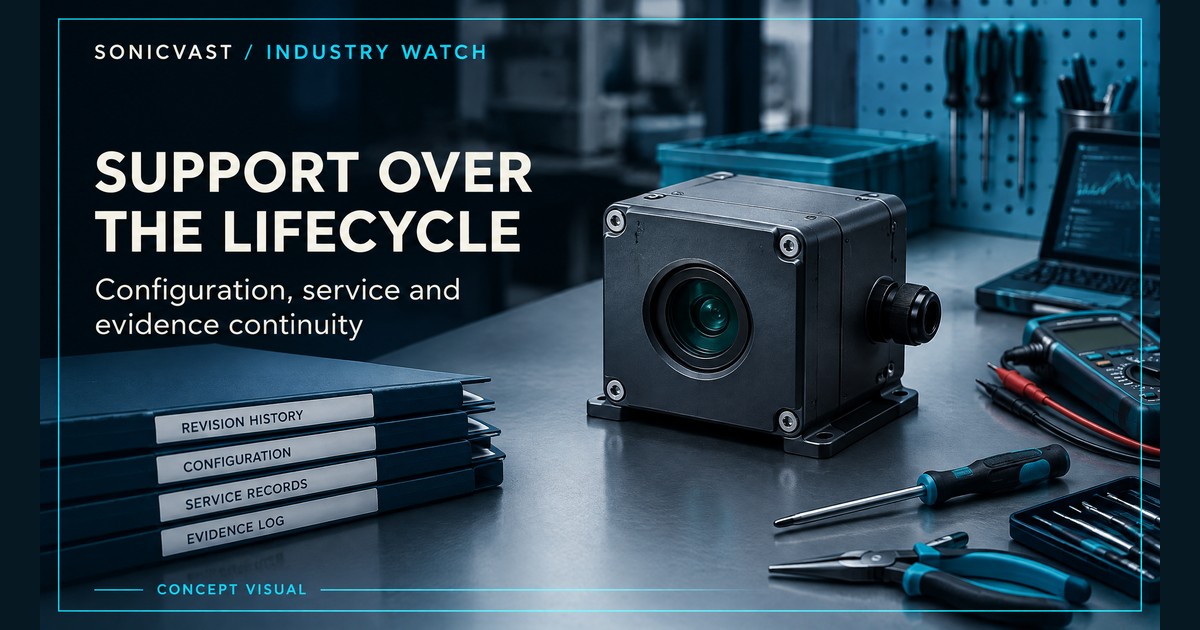
ChessPlus brings existing equipment support into a through-life framework. The announcement describes services offered, not a new customer contract.
A framework launch, not a contract award
Unmanned Airspace's 3 November report says Chess Dynamics, part of the Cohort Group, launched ChessPlus to help customers anticipate support requirements before they affect equipment availability. European Security & Defence also carries a launch account headed 3 November 2026 and explicitly identifies Chess Dynamics as its source. EDR Magazine publishes matching launch coverage.
These accounts establish a public service-framework announcement. They do not name a customer that has contracted for ChessPlus, disclose a contract value or confirm a delivered support package. Unmanned Airspace identifies a 3 November company press release, but the original release was not located on the issuer's public news index. The independently verified date is the industry reporting date; the announcement date remains attributed to that coverage.
Support across the Chess Dynamics range
The fuller account in European Security & Defence says the framework will cover the Chess Dynamics range, including Hawkeye and SeaEagle product families and systems incorporating Vision4ce video and image processing. Unmanned Airspace specifically includes the company's counter-uncrewed aerial systems equipment. This describes the supplier's support portfolio, not a claim that every product shares the same sensors or interfaces.
Depending on customer need, the offered package can include maintenance planning, spares provisioning, training, technical and field-service support, documentation, obsolescence management, in-service monitoring, and repairs and overhauls. The reports describe the framework as modular and scalable for both new systems and equipment already in service. They do not establish which elements any particular customer has selected.
Existing services brought into one structure
European Security & Defence reports that ChessPlus formalises support activities Chess Dynamics already provides. The stated change is a coordinated approach across the system lifecycle, rather than commissioning each support activity separately when a requirement arises. The issuer's undated company profile separately describes established training, refurbishment and maintenance services, providing context for that distinction.
The announcement therefore concerns the organisation of support as much as the introduction of a name. Planning for replacement parts, repairs and changing technical requirements is presented as an intended benefit. The published material does not quantify reduced delays, financial savings or an increase in availability, so those outcomes cannot be treated as demonstrated results.
Reliability records inform forecasts, not validation claims
The fuller launch reports describe using Data Recording, Analysis, and Corrective Action System outputs, alongside reliability, availability and maintainability data, to model likely future demand. The anticipated needs include spares, repairs, technical intervention and lifecycle refresh. This is a description of the proposed support-planning method, not a published evaluation of its accuracy.
For industry readers, that distinction matters because maintenance evidence answers different questions from sensing evidence. A record of component failures or repair demand can inform support forecasts, but does not by itself establish detection accuracy or performance in a particular environment. The launch accounts provide no dataset, forecast-validation results or independently measured performance comparison.
Lifecycle changes and integration evidence remain distinct
The civil relevance is the connection between long-lived equipment and the evidence associated with its configuration. A repair, replacement component or software change can alter the configuration to which an earlier integration assessment applies. A support framework is therefore relevant to the discussion of traceable equipment histories, without itself proving any new integration.
ChessPlus remains a defence-focused service announcement. Its references to electro-optical product families and video processing do not establish acoustic sensing, universal compatibility or civil certification. Nor does coverage of a supplier's wider range show that all sensor layers have been tested together. The useful industry context is the separation of offered support, contracted service and demonstrated system outcomes.
Civil industry relevance
For civil low-altitude security coverage, the relevant theme is the relationship between equipment changes, maintenance records and integration evidence. ChessPlus is a defence support announcement, not evidence of civil approval or cross-vendor compatibility.
Explore integration evidenceSource-attributed industry reporting. No SonicVast involvement, acoustic integration or validated combined-system performance is established by this announcement.