
INTEGRATOR BRIEF · ACOUSTIC DETECTION
How C-UAS Companies Can Add Acoustic Detection to Their Product Portfolio
For system integrators, the opportunity is not simply to add microphones. It is to design an accountable path from sound observations to human-reviewed context, with clear authorization, data handling, and customer expectations.
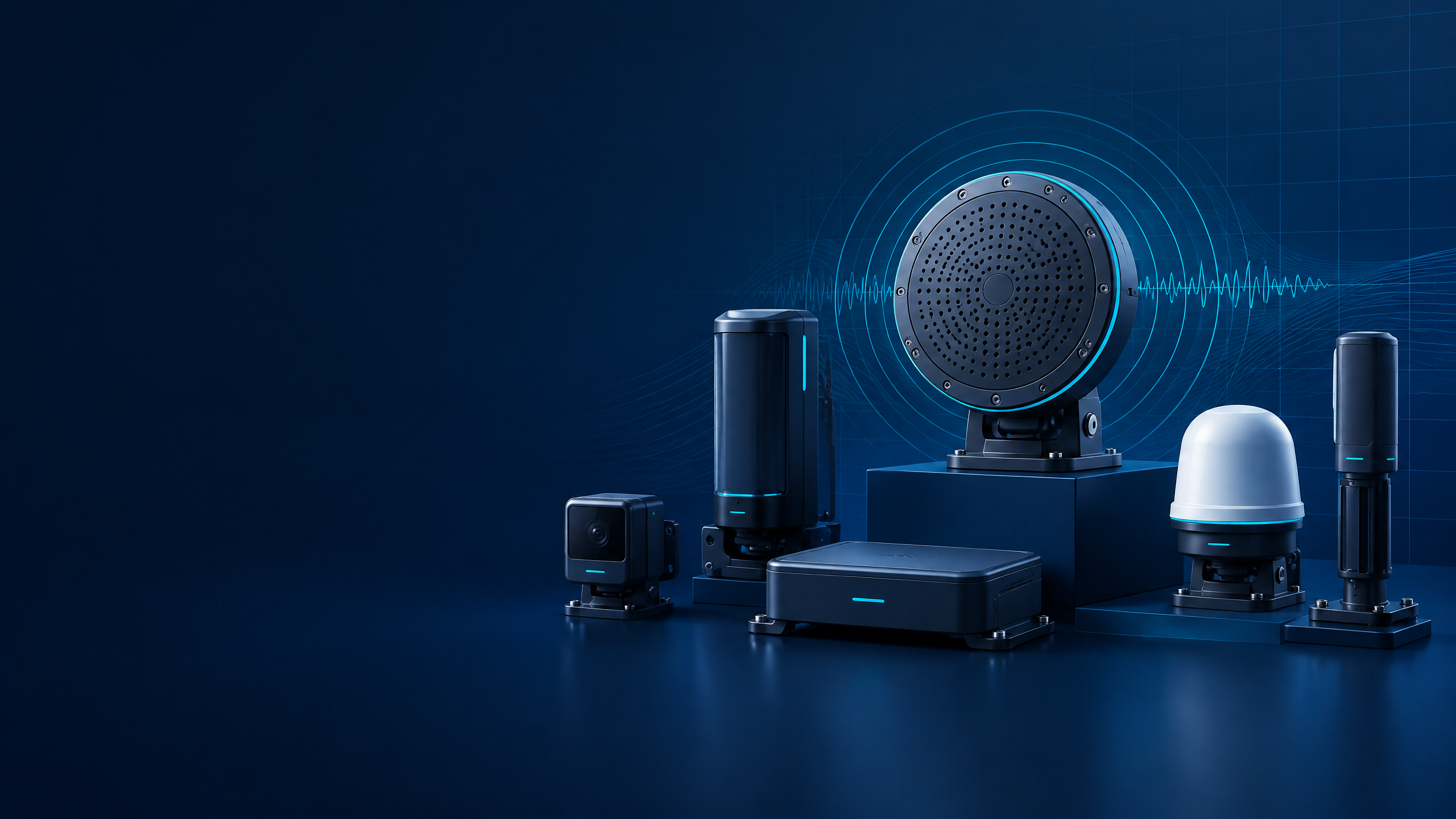
Acoustic detection can broaden a C-UAS portfolio when it is introduced as a governed evidence layer—not as an automatic verdict or a substitute for site-specific validation.
Sell an evidence layer, not a promise of certainty
Acoustic sensing can contribute a time-stamped observation to a broader low-altitude security picture. Its value is strongest when the product explains what was heard, what remains uncertain, and how a reviewer can compare it with other authorized inputs. Position the capability as decision support with documented limits, not as proof of an object, intent, or identity.
Turn alerts into reviewable records
A portfolio addition should define who receives an acoustic event, what context is shown, and when a human review is required. Integrators can design a review queue, confidence language, and audit trail that distinguish an acoustic observation from a confirmed assessment. Any linkage to EO/IR or other sensors should preserve provenance and avoid silently converting correlation into fact.
Make data boundaries part of the product
Microphone deployments may raise questions about privacy, consent, retention, access, and local rules. Specify collection purpose, permitted locations, retention windows, role-based access, export controls, and deletion procedures before deployment. Treat API fields, event logs, and model updates as governed data surfaces; do not collect or expose more information than the approved use requires.
Validate fit before promising outcomes
Acoustic behavior depends on architecture, terrain, weather, construction, traffic, machinery, wildlife, and other local conditions. Use an authorized evaluation plan to establish what the system can and cannot support at the customer site. Document nuisance sources, maintenance needs, review workload, failure modes, and change-control triggers rather than transferring assumptions from one location to another.
WHERE THIS FITS
This approach is applicable to civil system integrators, airports, utilities, campuses, industrial sites, and other critical-infrastructure teams assessing an additional sensing input. Suitability depends on the approved purpose, acoustic environment, privacy assessment, operating procedures, integration interfaces, and the customer’s ability to staff review and governance. It should not be treated as a universal architecture or a replacement for optical, RF, procedural, or other authorized controls.
Start with a scoped workshop: define the customer’s approved use, map acoustic events into the existing review workflow, identify privacy and data-governance requirements, and agree on a site-specific validation plan before product claims are finalized.Educational content for civil low-altitude security planning. It does not provide legal, regulatory, operational, or safety advice, and it does not authorize monitoring or response. Requirements, permissions, and validation obligations vary by jurisdiction and site.