
INDUSTRY WATCH / RESPONSIBLE EVALUATION
DHS reports commercial C-UAS field assessment with state and local participants
On 1 October 2026, the U.S. Department of Homeland Security Science and Technology Directorate published an article describing a five-day field assessment conducted in August with state and local law-enforcement and emergency-response participants. DHS said the assessment considered commercially available C-UAS technologies under simulated conditions, including usability and performance measures intended to inform planning and procurement. This record reports the public DHS account. It does not identify unannounced vendors, establish an endorsement, verify capabilities beyond the described assessment, or imply SonicVast involvement.
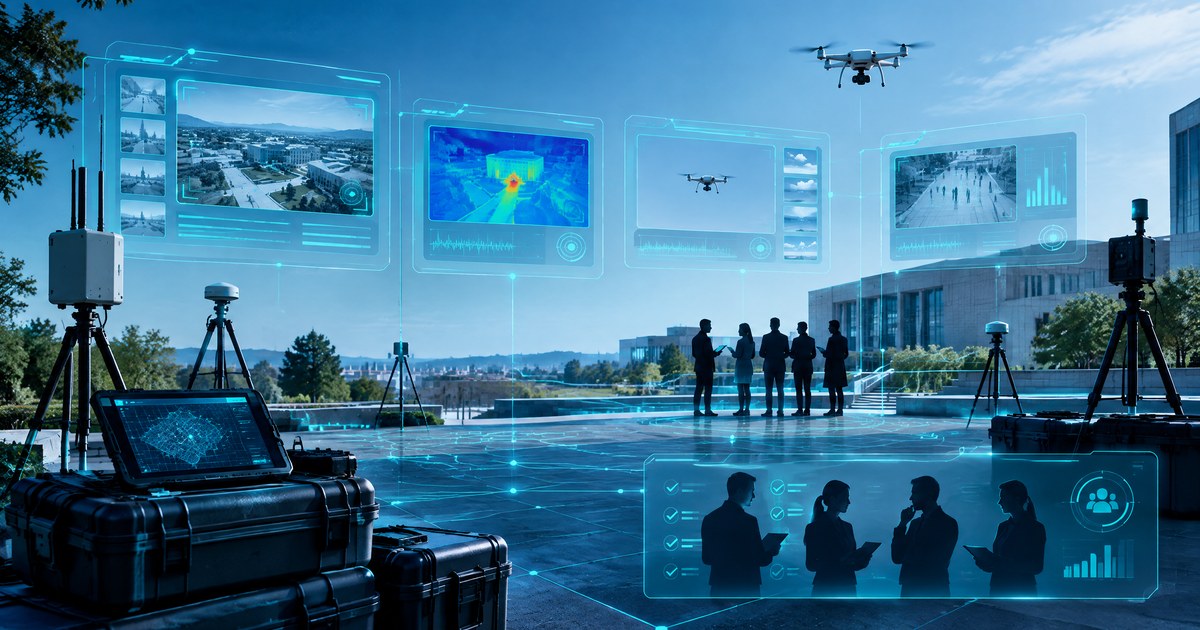
DHS Science and Technology reported a five-day August field assessment of commercial C-UAS technologies with state and local public-safety participants. The published article explains evaluation context, not product endorsement.
DHS describes an assessment of commercial technologies under simulated conditions.
DHS S&T said its National Urban Security Technology Laboratory team conducted a five-day assessment in August with state and local law-enforcement and emergency-response participants. The published article says the work examined commercially available C-UAS technologies in simulated conditions and considered usability and performance measures. It is a description of an evaluation programme—not a public ranking, universal certification, product endorsement or a statement that any technology will perform the same way at another site.
Field assessment value comes from defined questions and visible constraints.
A responsible evaluation separates what a system observed from what a reviewer concluded and records environmental conditions, user experience, safety constraints and unresolved limitations. It also distinguishes demonstration inputs from acceptance evidence. In civil settings, a useful assessment does not eliminate the need for privacy review, local authorization, data governance, accessibility, cyber assurance and human decision ownership.
Commercial technology assessment should inform accountable planning, not automatic procurement.
DHS’s reported assessment context highlights the importance of structured testing before a public-safety programme relies on a technology. Civil teams should define their use case, test criteria, retention boundaries, operating roles and escalation authority in writing. A government article about an assessment does not authorize a local deployment or establish that a product is appropriate elsewhere. This record provides no operational methods, vendor recommendation, technical settings or SonicVast performance claim.
Build evaluations around testable questions and accountable review
The strongest evaluation plans state what will be measured, who will review it, what remains out of scope and how local legal, privacy and safety conditions control the decision.
Discuss a civil, compliance-first evaluation framework with SonicVast.Source note: U.S. Department of Homeland Security Science and Technology Directorate article published 1 October 2026, describing a five-day assessment conducted in August. Source names are displayed for transparency; no external links are presented. This record does not identify vendors, claim endorsement, certify performance, recommend procurement, authorize deployment or imply SonicVast involvement.