
SonicVast Field Guide
What Data Should a Drone Detection Sensor Provide to a C2 Platform?
A sensor is not merely a source of alerts. For a C2 platform, it is a source of evidence with a chain of custody, a confidence boundary, and a duty to explain what is known, what is inferred, and what still requires review.
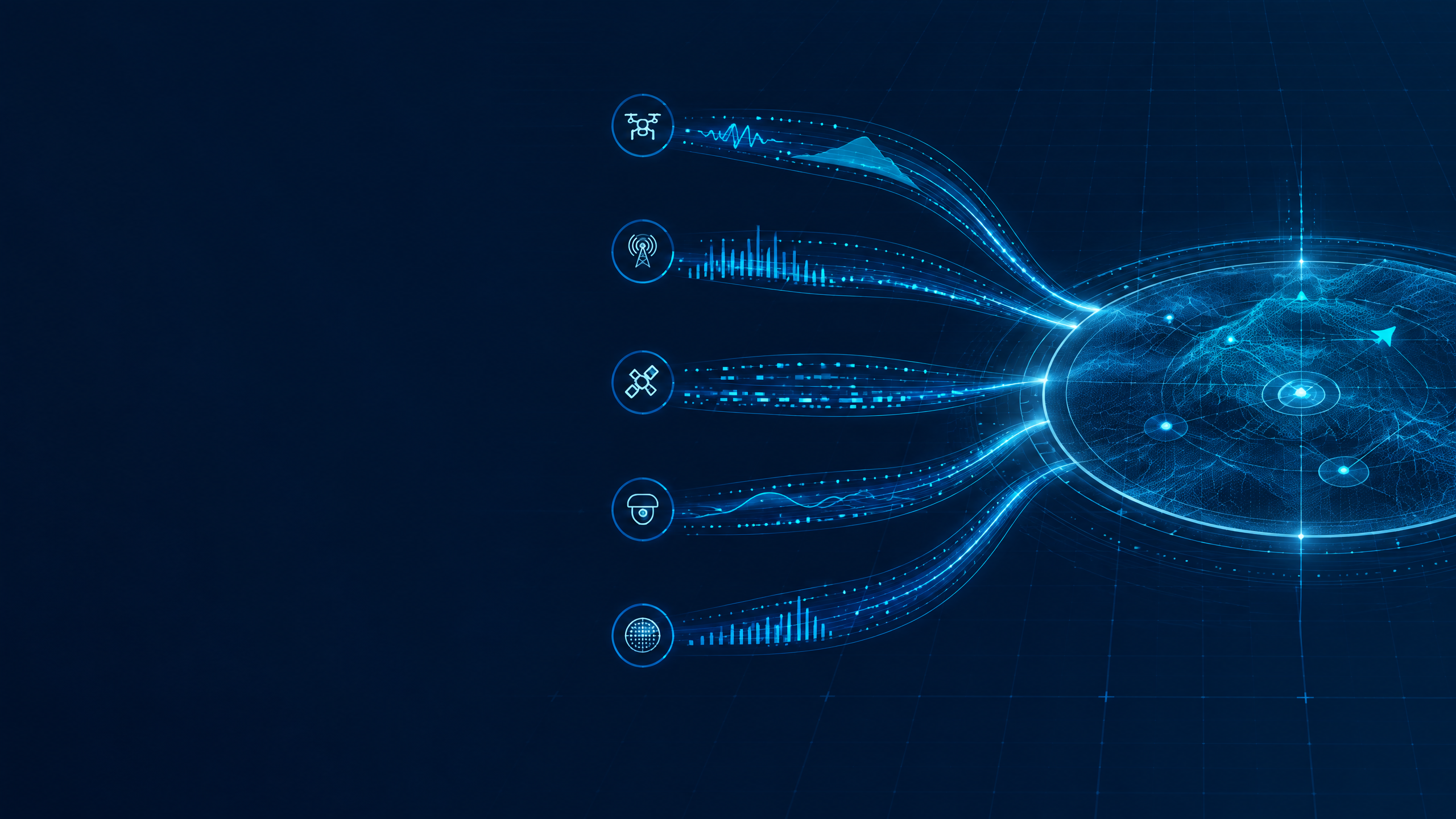
A practical, compliance-first framework for deciding which drone-detection data a C2 platform should receive, how uncertainty should be represented, and where human authorization must remain in control.
Start with an auditable observation
Each event should carry a stable event identifier, sensor and software identity, observation time, receipt time, site or zone reference, and the data-quality state. Preserve the original observation separately from later correlation or classification. This lets an integrator reconstruct what the sensor actually reported without turning an interpretation into a fact.
Represent the evidence, not just the alert
A useful payload describes the sensing modality—acoustic, optical, or RF—along with the evidence type, relevant feature or track reference, confidence expression, and known limitations. If media or derived features are included, define retention, access, integrity, and redaction rules before connecting the API. A C2 view should make it clear whether an item is raw data, a detection, a correlation, or a human assessment.
Make time, context, and uncertainty first-class
The platform should receive clock quality, time basis, update state, stale-data indication, and the conditions that may affect interpretation. Confidence should have a documented meaning rather than appearing as an unexplained score. Conflicting observations should remain visible, with provenance and revision history, so that automated correlation supports—not replaces—human review.
Connect data to authorized decisions
A sensor message should expose the role, permission boundary, and review state required for downstream action. The integration should support acknowledgment, escalation, correction, and closure without allowing an unverified classification to become an automatic directive. Record who accessed or changed an event, under which policy, and why; use site-specific validation to confirm that the workflow behaves as intended in the local environment.
Where this applies
Use this checklist when defining an API contract, reviewing a sensor vendor payload, planning a data-retention model, or preparing an acceptance test for an airport, utility, campus, public venue, or other critical-infrastructure environment. Adapt the fields to the site’s authorization model and privacy obligations; do not assume that a field is necessary merely because it is available.
Ask your integration team to map every sensor field to an evidence purpose, a data owner, a retention rule, and a human decision point before the next C2 design review.SonicVast provides this material for general civil-security education. It is not legal, privacy, safety, procurement, or operational advice. Requirements vary by jurisdiction, site, sensor, and authorization context; obtain qualified review and perform documented, site-specific validation before deployment.