
INTEGRATION NOTE / C-UAS ARCHITECTURE
How to Integrate Third-Party Drone Sensors Into a C-UAS Architecture
Adding another sensor is not the same as adding another source of truth. A safe C-UAS architecture makes every external observation understandable, attributable, reviewable, and reversible before it can influence a decision.
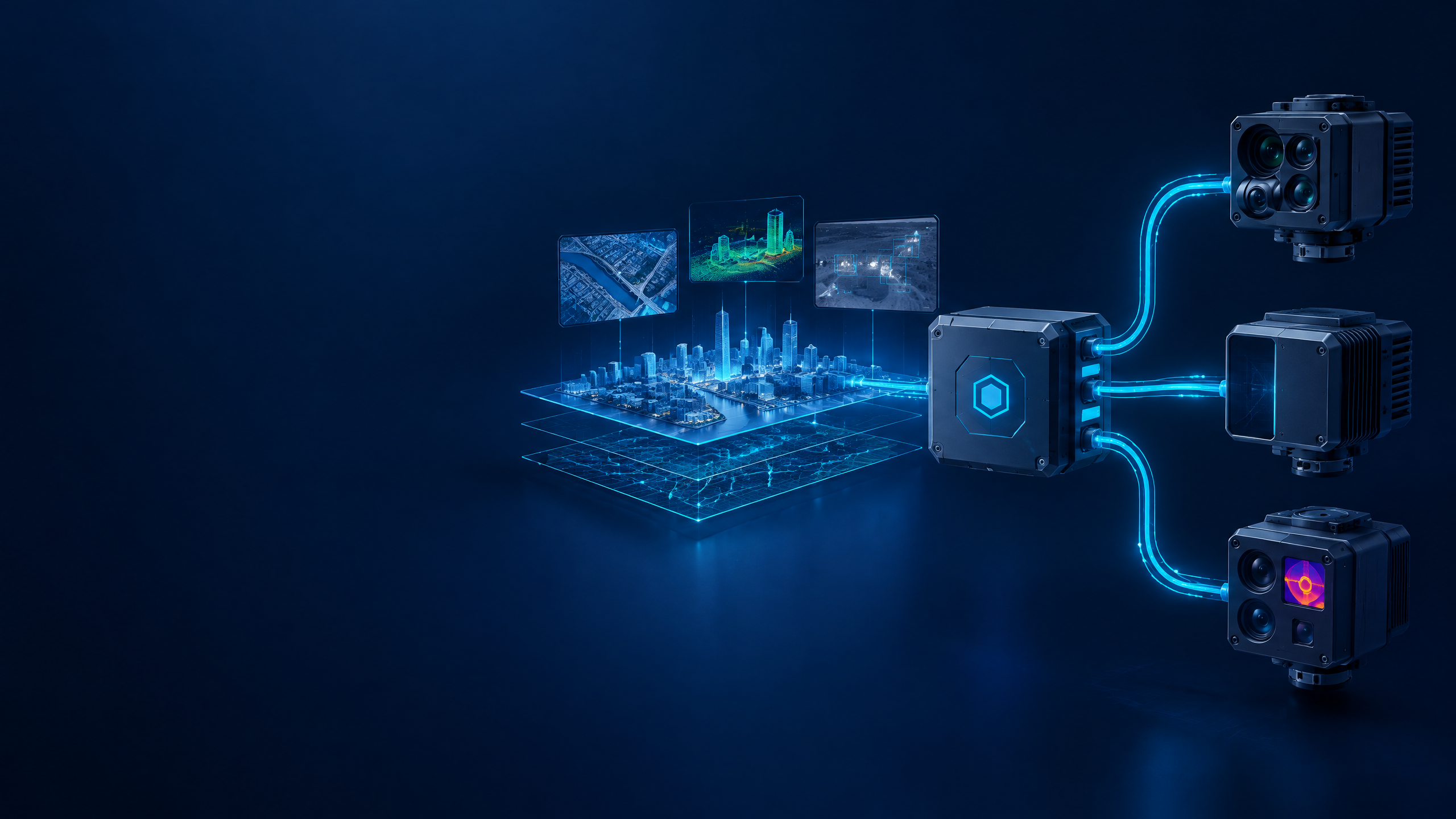
A practical, governance-led approach to connecting external acoustic, optical, and RF sensors without treating an alert as proof. Define the evidence boundary, preserve provenance, and keep authorization and human review in the loop.
Start with a sensor data contract
Document the interface before connecting hardware. Record what each sensor actually produces, its time source, coordinate reference, calibration state, health indicators, uncertainty representation, firmware or configuration identity, and retention behavior. Prefer a versioned API or message schema with explicit units and null handling. Treat vendor labels as observations, not confirmed identity, and require a test environment that cannot affect live decisions.
Fuse observations without erasing disagreement
Normalize timestamps and site context, then correlate only within documented rules. Keep the original observation, transformation history, confidence statement, and source identifier alongside any derived event. If acoustic, optical, or RF inputs conflict, display the conflict instead of silently averaging it away. A fused event should say which evidence supports it, which evidence is missing, and when the record should expire.
Put authorization and people in the loop
Route alerts through defined roles, escalation paths, and approval gates. A C2 view should distinguish raw data, system-generated assessment, and human disposition. Require identity and access controls, least-privilege permissions, audit logs, change approval, and a documented way to suspend a faulty feed. No sensor alert should authorize a response by itself; applicable law, site policy, and designated personnel remain controlling.
Operate a measured validation loop
Validate the integration against the actual site, environment, network path, privacy obligations, and operating constraints. Use representative, authorized test cases and record false, missed, delayed, duplicated, and unavailable observations without turning them into universal performance claims. Re-test after placement, software, firmware, schema, or policy changes. Define rollback, incident review, and retirement criteria before production acceptance.
Where this applies
Use this pattern when a site needs to evaluate external drone-related observations alongside existing security, safety, or facilities systems. It is suitable for early design reviews, procurement requirements, integration testing, control-room workflow design, and post-change assurance. It does not replace a site-specific risk assessment, legal review, data-protection assessment, or acceptance test plan.
Build the integration brief first: list each observation, owner, purpose, uncertainty, access rule, retention rule, reviewer, and rollback path. Then ask SonicVast to help your team turn that brief into a site-specific, reviewable architecture.Educational material for civil low-altitude security. SonicVast does not provide legal advice, does not endorse a particular third-party sensor, and does not guarantee any operational result. Confirm requirements with qualified legal, privacy, cybersecurity, safety, and aviation professionals before deployment.