
INDUSTRY WATCH / CONTRACT CONTEXT
RTX says Raytheon received approximately USD 729 million in LIDS-component contracts
RTX announced on 13 October that Raytheon had received approximately USD 729 million in contracts to deliver components incorporated into the Low, slow, small, unmanned aircraft Integrated Defeat System (LIDS) for the U.S. Army, Qatar and Jordan. The release names the Ku-band Radio Frequency Sensor and Coyote components and refers to fixed-site and mobile configurations. Public material reviewed does not disclose contract identifiers, country-by-country allocations, quantities, schedules, deployment outcomes or operational performance. This source-attributed record therefore treats the announcement as a bounded public contract disclosure, not a broader demand forecast or a conclusion about any site’s technology needs.
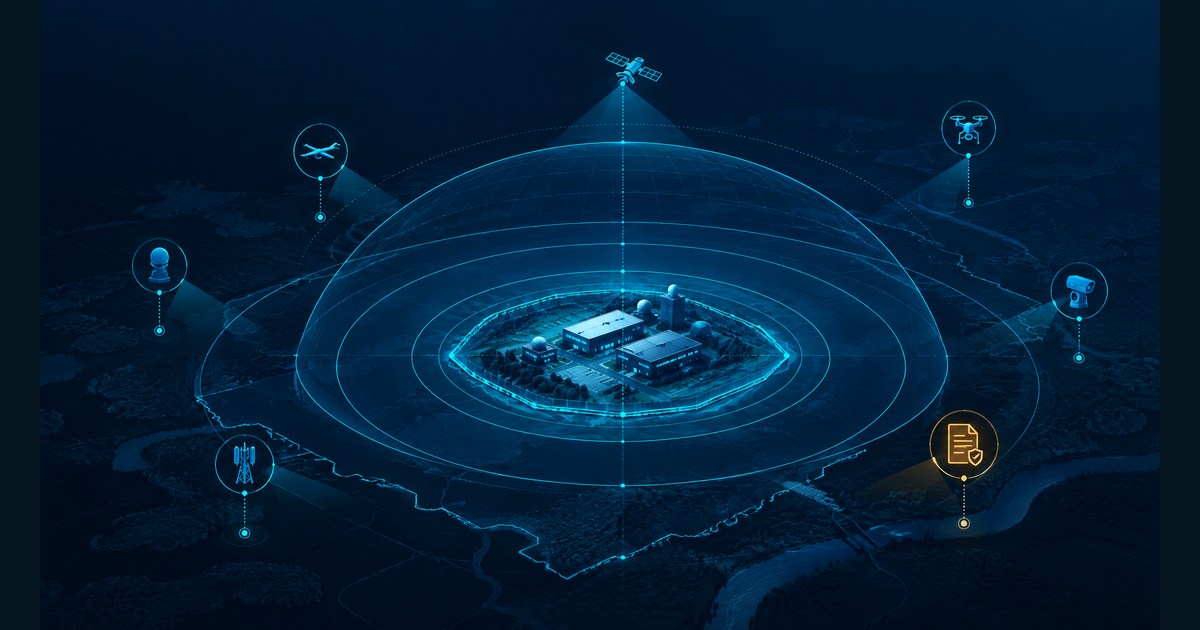
RTX said Raytheon received contracts worth about USD 729 million involving LIDS components for the U.S. Army, Qatar and Jordan; country allocations and delivery details were not disclosed.
The announcement names a contract value, three customers and high-level LIDS components.
RTX states that Raytheon received approximately USD 729 million in contracts for components incorporated into LIDS for the U.S. Army, Qatar and Jordan. The company names KuRFS and Coyote and notes fixed-site and mobile configurations. This supports a record of a company-announced contract scope; it does not identify a complete system purchase for every customer or reveal the value assigned to each country.
The public announcement does not establish delivery schedules, deployed configurations or performance results.
No reviewed public source disclosed award identifiers, quantities, delivery timing, country-level allocation, operational status or outcome measures. The stated components and customer list should therefore remain attributed to RTX. A supplier announcement cannot be read as proof of deployment, technical effectiveness, procurement completion beyond the disclosed award, or a forecast for unrelated civil projects.
Public contract context reinforces the value of asking integration and governance questions.
For authorised civil programmes, a procurement headline is not a site design. Security and systems-integration teams still need a lawful purpose, aviation coordination, privacy controls, cybersecurity review, environmental assessment and named human decision responsibility. Complementary acoustic, RF, optical and other sources should be evaluated through documented evidence limits rather than presumed from another organisation’s contract.
Use public procurement records to frame integration questions
Keep a named source, disclosed scope, unresolved details and a local evidence-governance process separate before applying an industry announcement to a civil programme.
Discuss a civil, compliance-first multi-sensor evidence and integration review with SonicVast.Source note: RTX, PR Newswire and MarketWatch / Dow Jones material reviewed on 14 October 2026. Source names are shown for transparency; external links are not displayed. This record does not claim deployment, performance, allocation, procurement demand, civil-site suitability or SonicVast involvement.