
INDUSTRY WATCH / ACOUSTIC + AI
Reported Spider system illustrates acoustic classification as an industry direction
Izvestia reported on 22 September 2026 that developers described a system called Spider as an acoustic sensor network using a neural network to classify sound sources. The report said the developers were preparing the system for mass production. This source-attributed record preserves the published claim as industry context only. It does not verify test results, accuracy, location estimates, reliability, deployment, legal suitability, or any relationship to SonicVast.
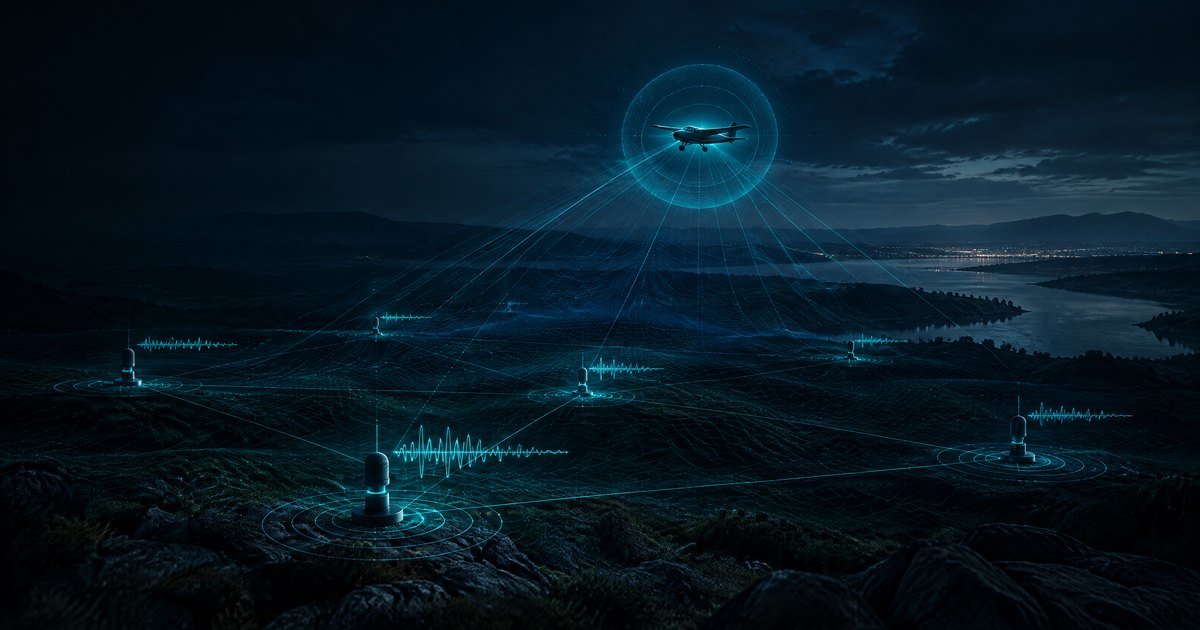
Izvestia reported developer statements describing the Spider system as acoustic sensors with a neural network for classifying sound sources. The account is treated as a reported technology claim, not independent validation.
The report describes acoustic sensors paired with neural-network classification.
Izvestia wrote that the developers described Spider as a set of acoustic sensors with a neural network intended to classify sound sources. Its account attributes the description, including the stated production intention, to the developers. This establishes neither an independent trial result nor a measured capability. A reported classification output remains an observation that needs defined data quality, environmental context and accountable review.
Sound analysis can add context without settling what an object is.
Passive acoustic systems can organize sound features into time-stamped observations and may help a reviewer decide what to check next. However, background noise, weather, terrain, buildings and ordinary activity affect what is heard. A model output is not proof of aircraft identity, operator, authorization or intent. Civil programmes should make confidence, limits and competing explanations visible rather than convert a classification into an automatic conclusion.
The useful question is whether an acoustic input is reviewable and proportionate.
For civil low-altitude safety teams, an announced acoustic-AI system is a prompt to ask about calibration, data handling, privacy, retained evidence, human review and site authorization. It is not an operational recommendation or a substitute for a site assessment. This record offers no installation settings, response methods, countermeasure guidance, performance comparison or SonicVast-equivalence claim.
Read acoustic-AI claims with evidence discipline
A responsible review separates a published feature description from a site-specific operating case. It asks what was observed, under which conditions, who evaluated it and which limitations remain before any civil decision is considered.
Discuss a civil, compliance-first acoustic evidence workflow with SonicVast.Source note: Izvestia report dated 22 September 2026 based on developer statements about the Spider system, with secondary coverage reviewed for context. Source names are displayed for transparency; no external links are presented. This record does not independently validate testing, performance, deployment, legality, procurement, operating suitability or SonicVast involvement.