
INDUSTRY WATCH / SENSOR ARCHITECTURE
Teledyne FLIR Defense announces Ranger R10-3DX compact counter-drone radar
Teledyne FLIR Defense announced the Ranger R10-3DX on 13 October at AUSA 2026. Company material describes a compact, mid-range radar for counter-drone, airport-security, border-security and critical-asset contexts, with digital beam-forming, multi-target tracking and AI-based classification. The company says one panel covers 90 degrees of azimuth and four panels provide 360-degree azimuth coverage, and it states Q1 2027 availability. The announcement’s coverage, classification and intended-use statements are manufacturer descriptions, not independently measured outcomes, a procurement award or a field-deployment record.
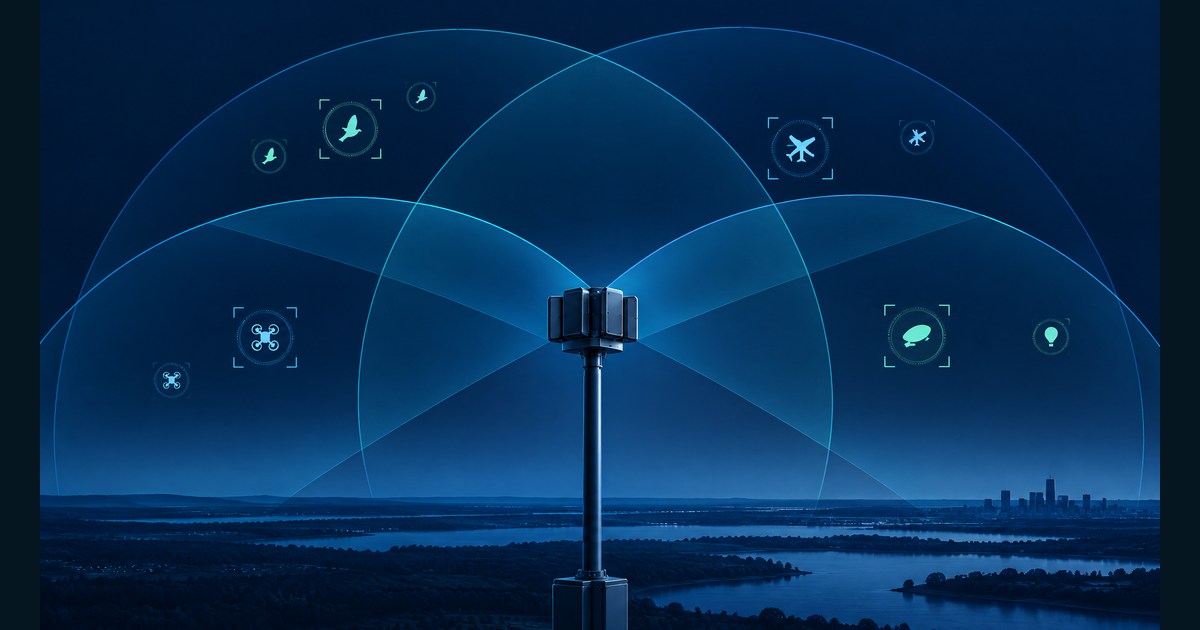
Teledyne FLIR Defense announced the Ranger R10-3DX at AUSA 2026, describing intended security uses and Q1 2027 availability; stated coverage and classification capabilities remain manufacturer claims.
The company presents a compact radar architecture for several security contexts.
Teledyne FLIR Defense describes the Ranger R10-3DX as a compact, mid-range radar intended for counter-drone, force-protection, airport-security, border-security and critical-asset contexts. Its public material refers to digital beam-forming, multi-target tracking and AI-based classification. These are manufacturer descriptions of intended use and design characteristics, rather than independently verified site outcomes.
Coverage and classification statements must remain separated from deployed performance.
The product page says a panel provides 90-degree azimuth coverage and four panels provide 360-degree azimuth coverage. It also uses manufacturer detection and classification language. The public sources reviewed do not establish an independent test protocol, accuracy, false-alert profile, all-environment performance, customer purchase or field outcome. A changing vehicle-range figure across company materials is another reason not to convert an announcement into a settled performance comparison.
A compact radar announcement reinforces the need for evidence-aware sensor complementarity.
Civil airport and critical-infrastructure teams should compare lawful purpose, site geometry, environmental factors, privacy, electromagnetic compatibility, integration interfaces and review workflow. Acoustic, RF, optical and radar sources may contribute different context, but none alone proves identity, authorisation or intent. The responsible outcome is a reviewable evidence record with named human ownership, not an assumed automatic decision.
Use product announcements to frame evidence and integration questions
Ask what a sensor may observe, which claims need site validation, how data retain provenance and who reviews uncertainty before any local selection decision.
Discuss a civil, compliance-first multi-sensor awareness and integration review with SonicVast.Source note: Teledyne FLIR Defense, a syndicated company release and Breaking Defense material reviewed on 14 October 2026. Source names are shown for transparency; external links are not displayed. This record does not claim independent performance, procurement, deployment, universal interoperability, civil suitability or SonicVast involvement.