
TECHNOLOGY INSIGHT / INTEGRATION
What Should C-UAS System Integrators Look for in a Drone Detection Supplier?
For civil C-UAS integrators, supplier selection is less about choosing the most impressive sensor and more about building a dependable decision process. A suitable partner should help translate site conditions, lawful objectives, safety duties, and operator workflows into a documented design. Detection outputs are evidence for review—not proof of identity, intent, authorization, or threat. This distinction matters at airports, energy facilities, oil and gas sites, and other critical infrastructure where a mistaken response can create safety, operational, privacy, or regulatory consequences.
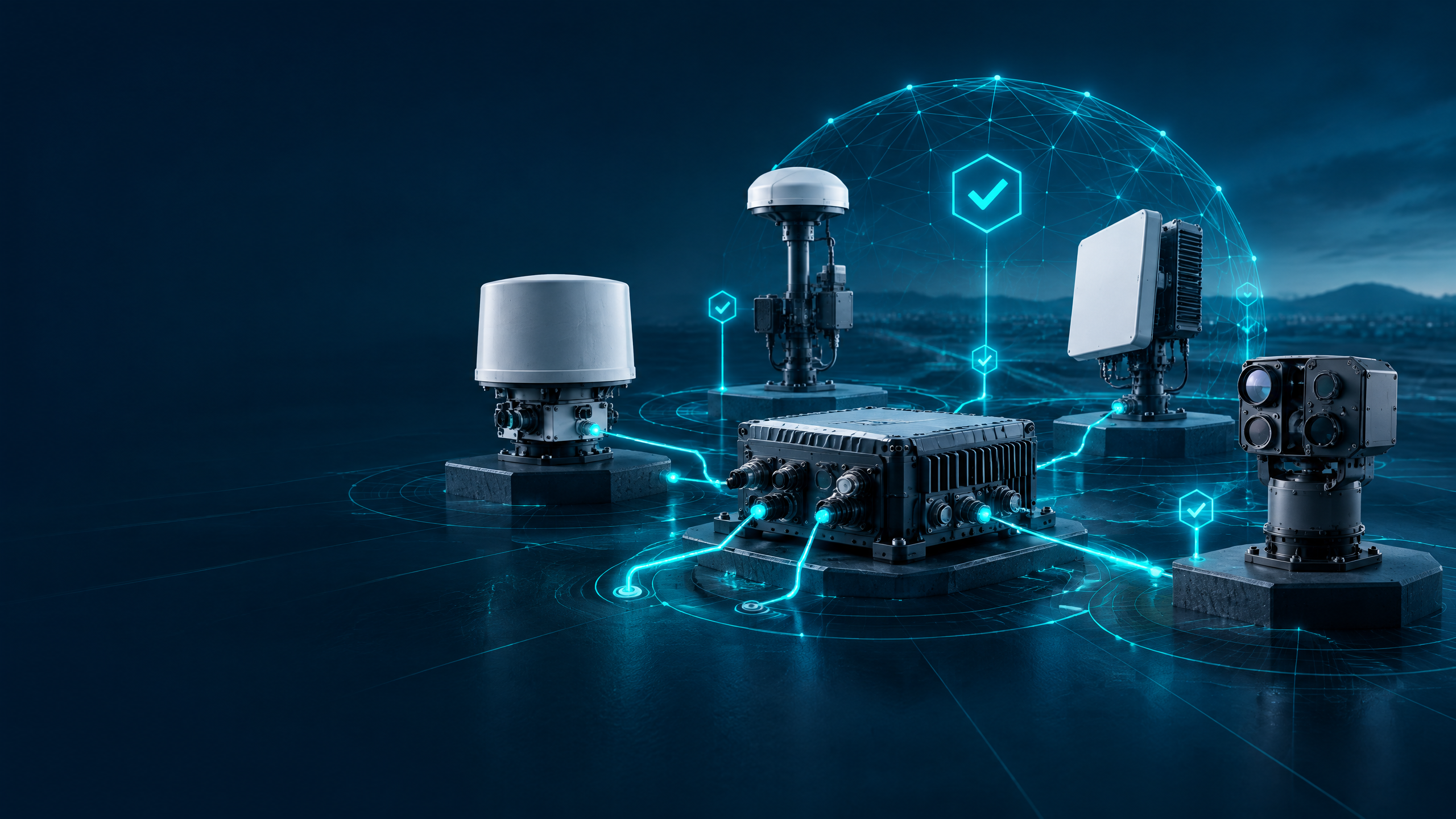
The right detection partner supports disciplined, site-led decisions rather than selling a single sensor as a complete answer.
Start with the site, not a sensor catalogue
Begin by documenting the operating environment: airspace and aviation obligations, terrain and structures, permitted activities, radio conditions, acoustic background, lighting, weather, public access, and nearby sensitive areas. Ask a supplier to explain how its equipment fits those constraints and what assumptions remain untested. RF observation, radar, acoustic sensing, EO/IR, site context, and operator reports should be treated as complementary evidence layers, with appropriate limits for each. Technical suitability is site-specific; a product that is useful in one location may require a different configuration, workflow, or validation plan elsewhere.
Design for incomplete and ambiguous evidence
A responsible supplier should discuss what the system cannot observe and how the integration handles uncertainty. RF-silent operation, autonomous behaviour, or fibre-optic control can reduce observable RF cues, so RF observation alone should not be treated as a universal detection method. Conversely, acoustic, EO/IR, and radar outputs can be affected by clutter, weather, lighting, reflections, or other sources. Look for clear confidence language, event correlation, audit trails, and human review rather than labels that imply identity, intent, authorization, or threat. The objective is a proportionate assessment supported by multiple, qualified observations.
Test the whole workflow and its governance
Request documented validation that reflects the actual site, including test conditions, known limitations, data handling, maintenance responsibilities, and change control. Evaluation should cover alert review, escalation, records, user permissions, system availability, and safe failure modes—not merely a sensor demonstration. For airports, energy, oil and gas, and critical infrastructure, involve aviation, spectrum, privacy, safety, emergency-policy, legal, and operational stakeholders before deployment. Clarify who may view data, who can approve action, how incidents are recorded, and how the system is reviewed after an event.
Choose a partner that integrates responsibly
The supplier relationship should include open interfaces, understandable outputs, training, support boundaries, cybersecurity expectations, and a realistic lifecycle plan. Integrators should be able to explain the evidence chain to site owners, regulators, auditors, and affected communities without relying on marketing language. Confirm how updates are assessed, how false or ambiguous alerts are handled, and how privacy safeguards are maintained over time. Any response beyond observation must remain subject to lawful authorization and the site’s approved safety and emergency policies. A good partner strengthens governance and human judgment; it does not replace them with an automated conclusion.
Integration principles for civil low-altitude safety
Before selecting or connecting any sensor, integrators should define the safety objective, accountability boundaries, data governance, validation criteria, and escalation path. Technical value comes from reviewable contextual evidence, not absolute conclusions drawn from a single signal.
Discuss a Civil Integration BriefingEditorial note: this article provides civil, compliance-first technology education only. It is not operational instruction, legal advice, or a performance promise. All sensing, data handling, system integration, and follow-on action must remain within applicable authorization, aviation, electromagnetic-compatibility, privacy, and site-governance requirements, with qualified human review.